
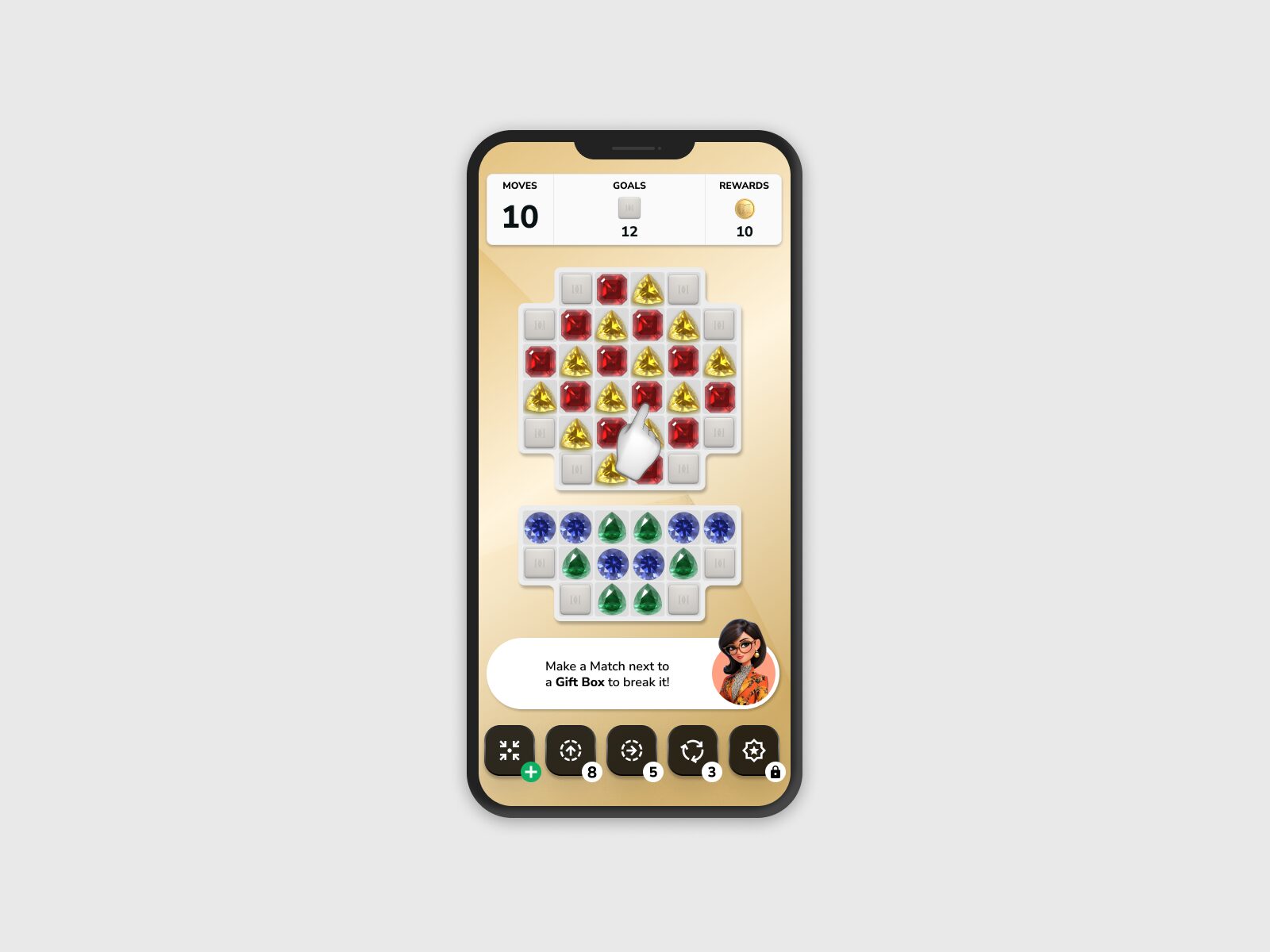
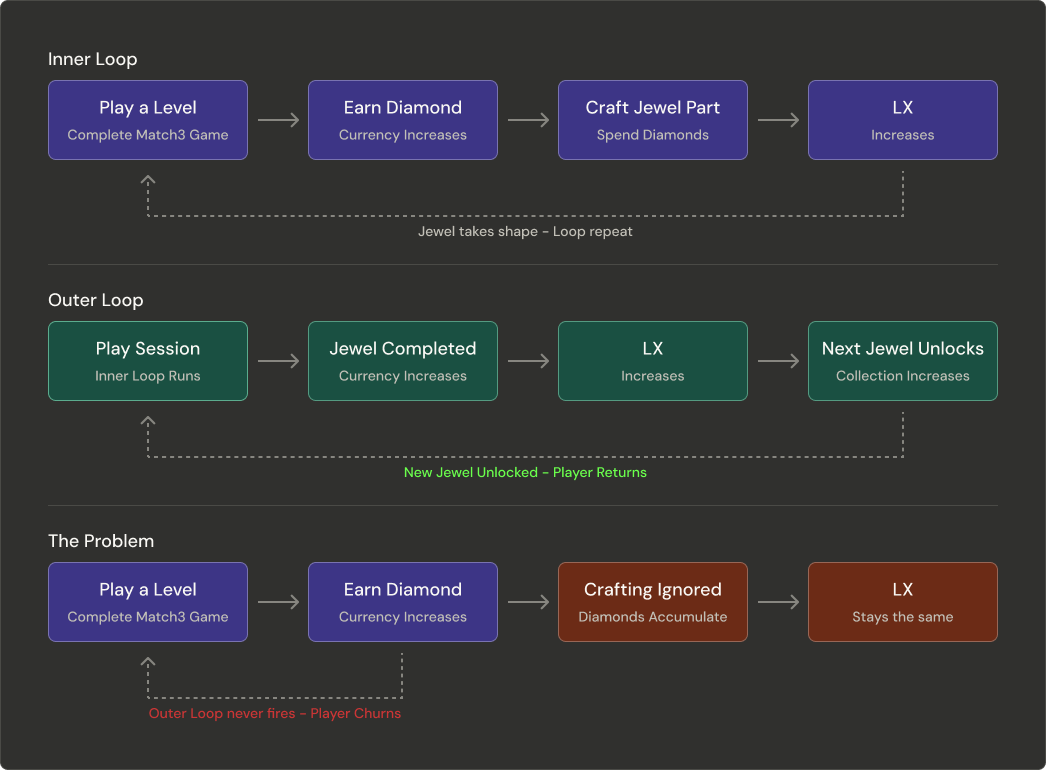
Two very different core loops
1. Discovery
Early data revealed a critical drop-off pattern — players were engaging with the match-3 mechanic and accumulating diamonds, but never making the leap into crafting. After 25 levels some players had stockpiled 20 diamonds without spending a single one. The second loop, the one that made the game unique, was being ignored entirely. The design challenge was clear: bridge the gap between the two mechanics and drive players into the crafting loop early enough in the first session to make it stick.
2. Research
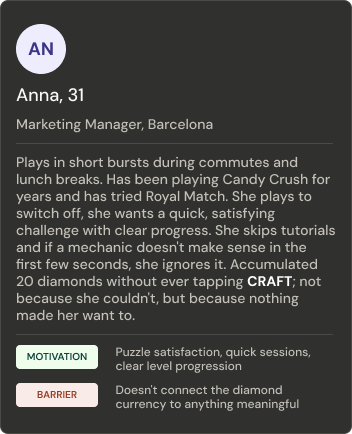
Research focused on understanding who plays games like this and what drives retention. Two distinct player types emerged. The first were match-3 players drawn to the puzzle mechanic who played for the satisfaction of completing levels — they were accumulating diamonds without understanding what they were for or seeing any reason to spend them. The second were collector-crafters who engaged with the full game loop, spending diamonds, customising jewels, and growing their LX score and collection. The key insight was that the first group wasn't failing to craft because the system was too complex — some simply hadn't connected the diamonds they were earning to anything meaningful, while others didn't yet see the value of the LX system at all. Competitive analysis of Candy Crush, Royal Match, and Royal Kingdom helped map what players already expected from the genre and where Diamond Dreams could carve out a distinct position.
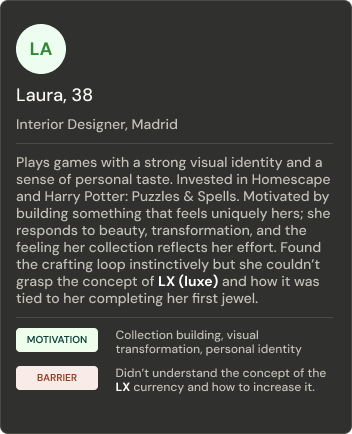
Personas
3. Synthesis & Define
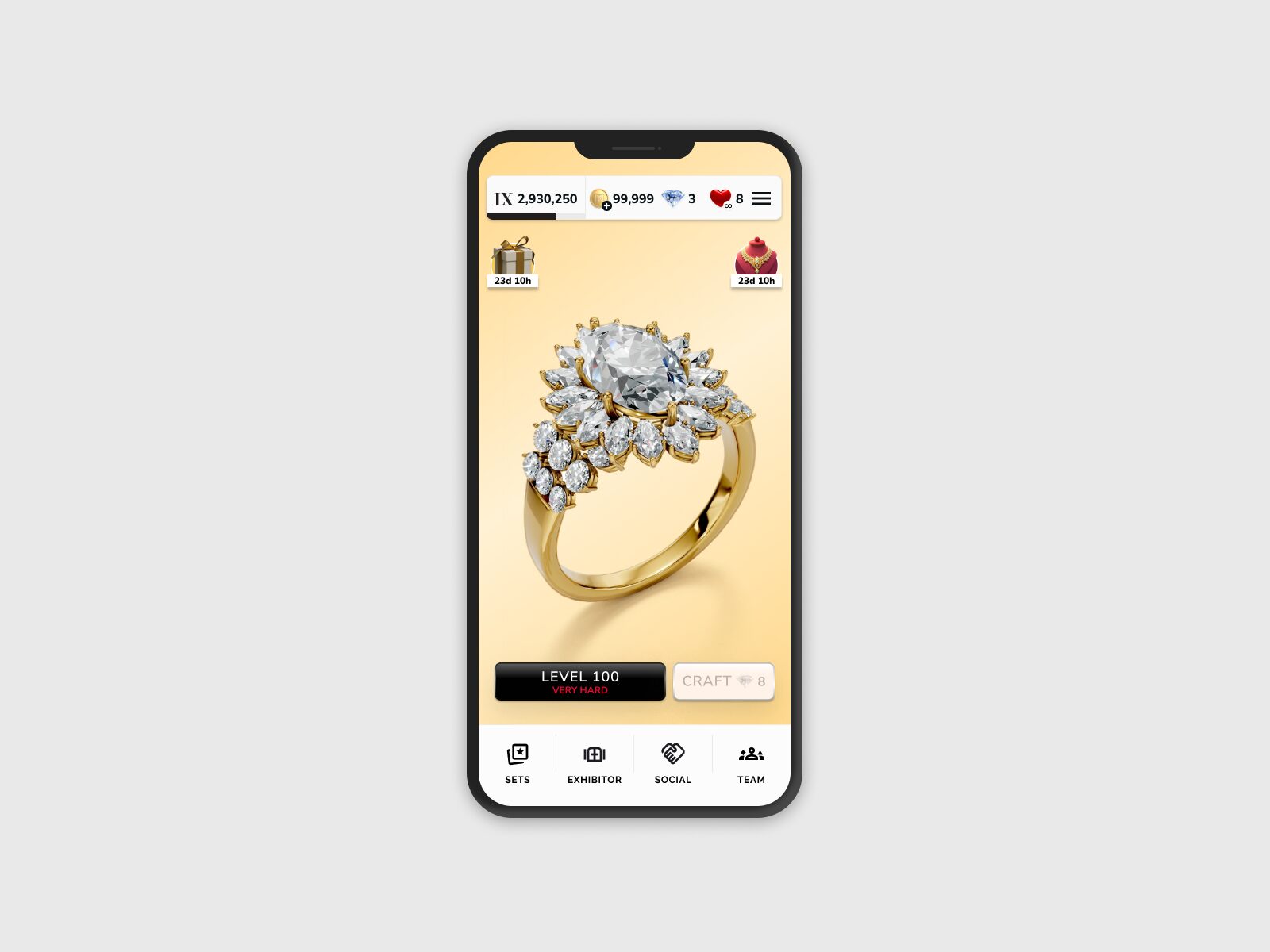
The research surfaced a clear split in player motivation and a precise moment of failure: the home screen. Players could see their diamond count, their LX score, and a CRAFT button — but nothing connected those three things into a meaningful action. The CRAFT button carried no information about what it cost or what it would give back, and a generic notification badge was easy to ignore. The LX score sat at 2,000 with no context for what it meant or how to grow it. The design problem was reframed as — how do you make the relationship between diamonds, crafting, and LX immediately legible on the home screen, and then make the crafting experience compelling enough that players who discover it want to come back and do it again?
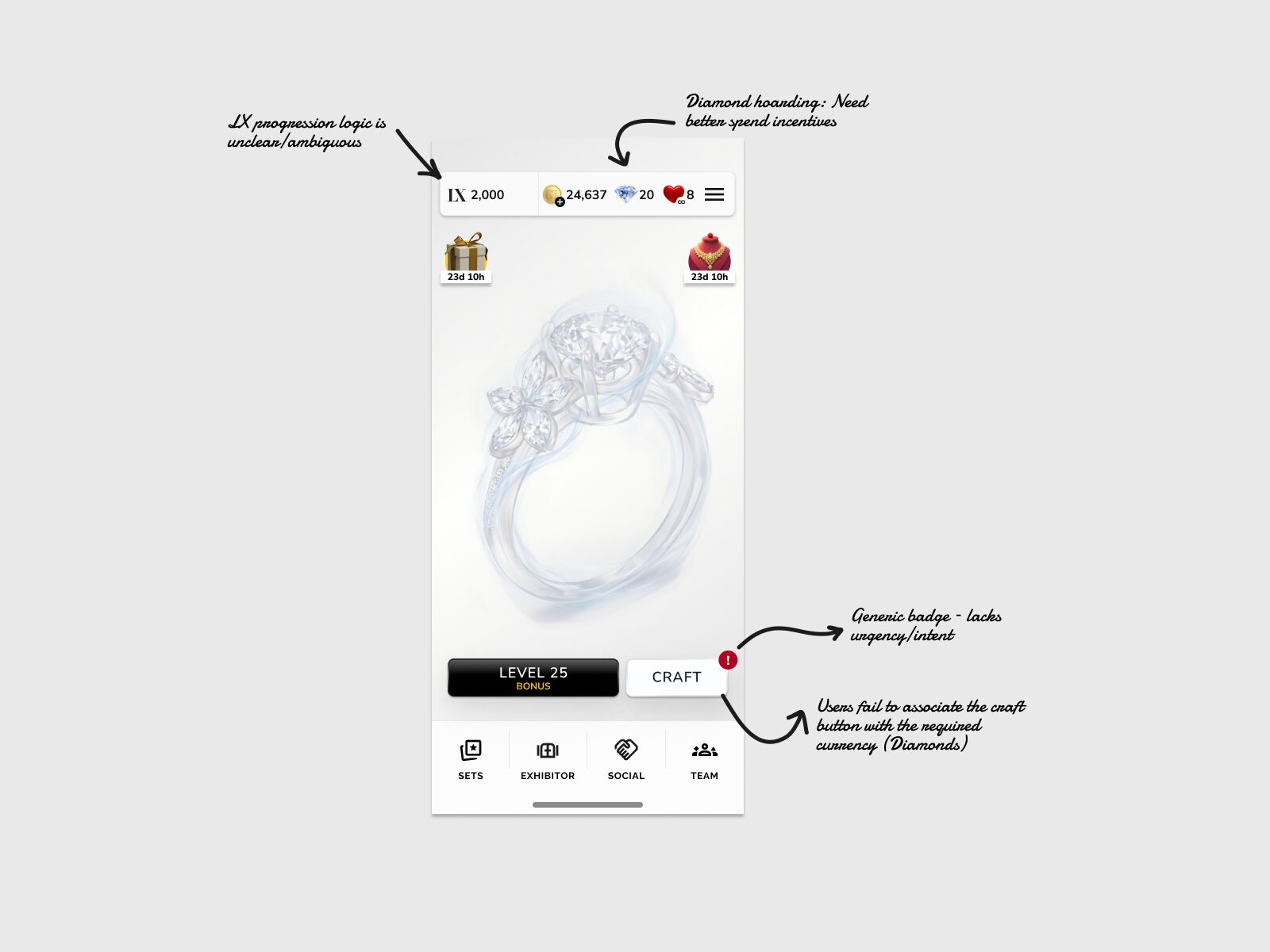
The Homescreen
4. Ideation
Ideation focused on two connected problems: getting players into the crafting loop from the home screen, and making the crafting experience itself feel rewarding enough to drive a second session. For the home screen, the idea of a contextual CRAFT button emerged — one that showed the diamond cost of the next crafting step inline, lit up and animated when the player had enough diamonds, and greyed out when they didn't, creating a clear goal state without any explanation.
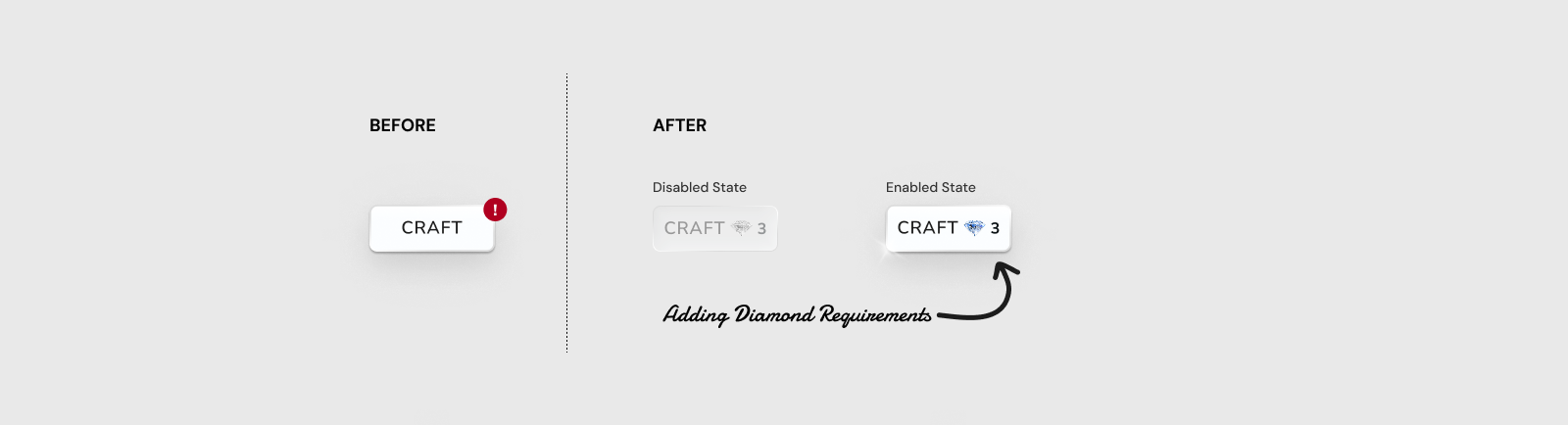
Craft Button
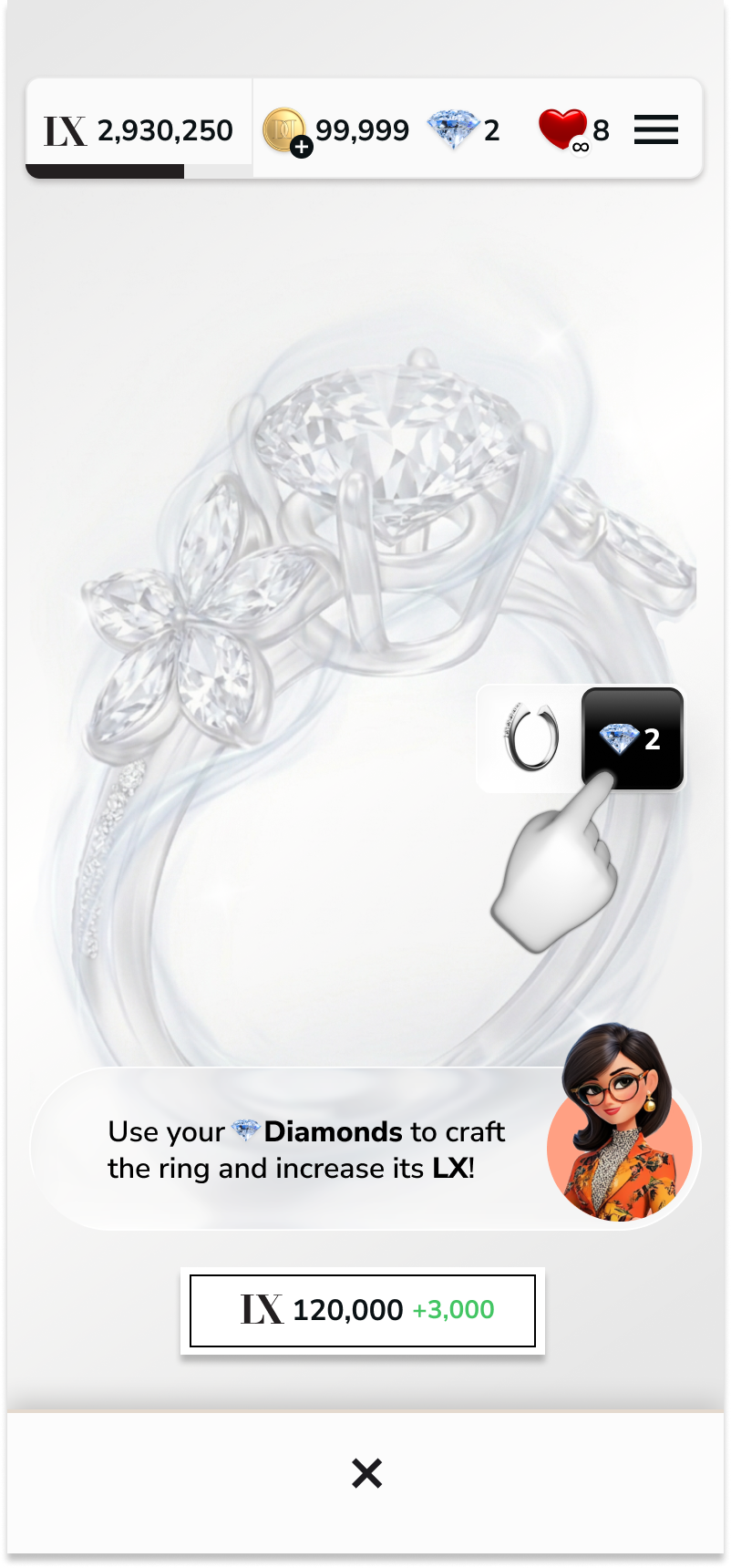
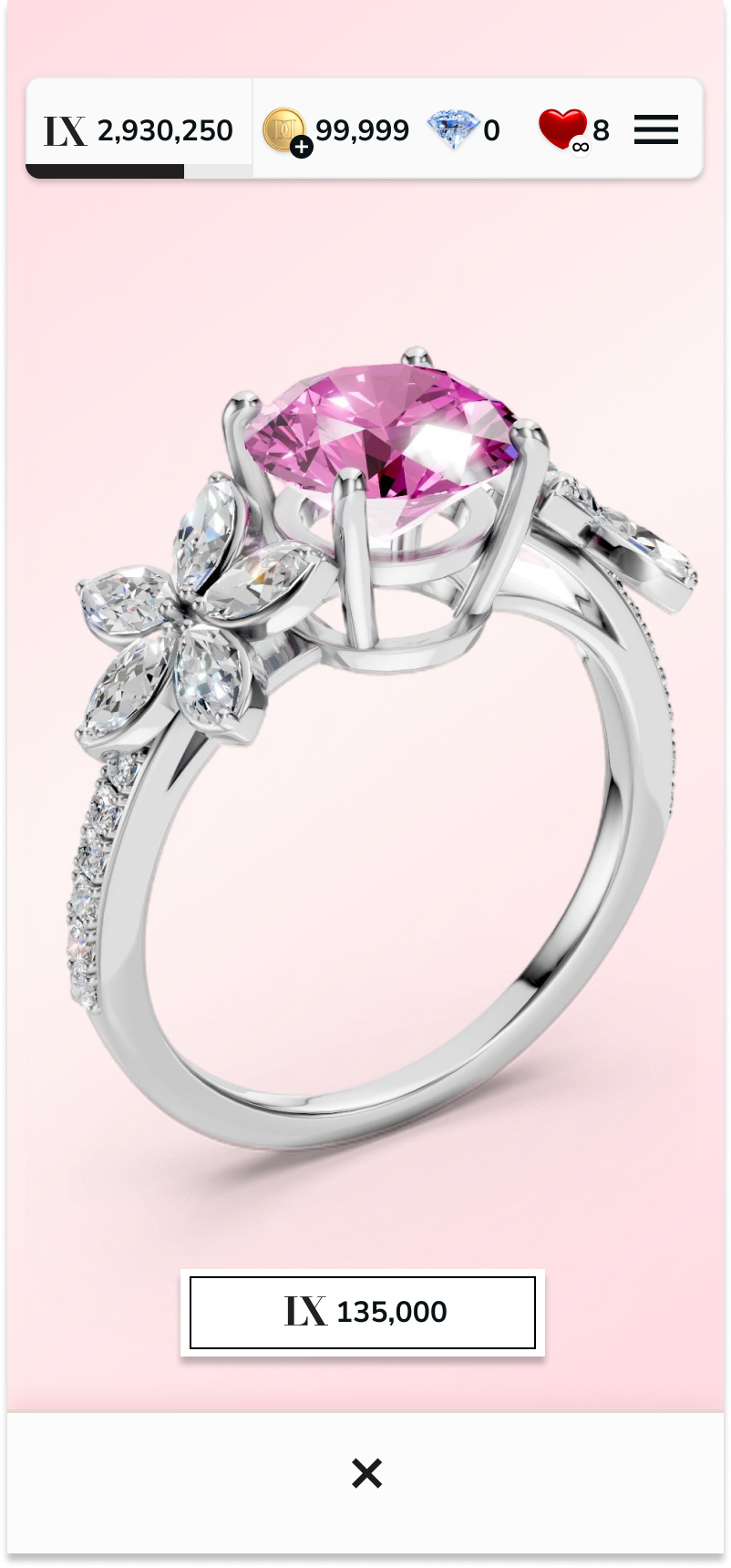
For the crafting experience, the spatial UI concept positioned each craftable part as a button placed exactly where that piece lived on the jewel, making the action feel tactile and the progress visible at every step. The LX increment indicator — showing the current jewel value and the exact increase each step would bring — was developed to give every crafting action a clear and growing reward. The grey-to-colour reveal was designed as the emotional culmination: the background flooding with the collection's signature colour only when the final piece was placed, turning completion into a genuinely luxurious moment.
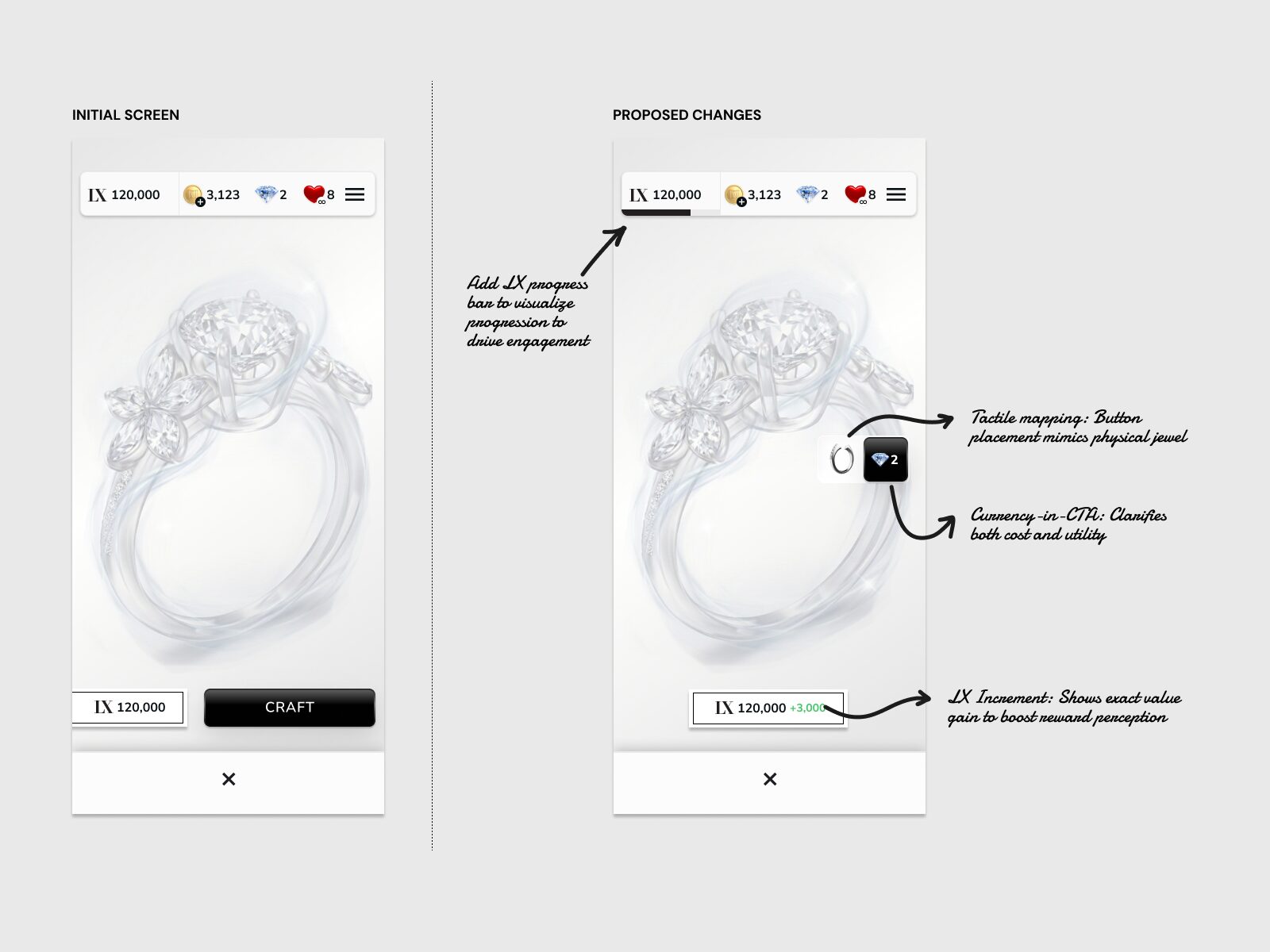
Proposed Craft Screen
5. Prototyping
Prototypes were built progressively around the two core problems. The home screen was tested first — wireframes validated whether showing the diamond cost on the CRAFT button was enough to drive the first tap, and whether the two button states (active and greyed out) communicated the goal clearly without instruction.
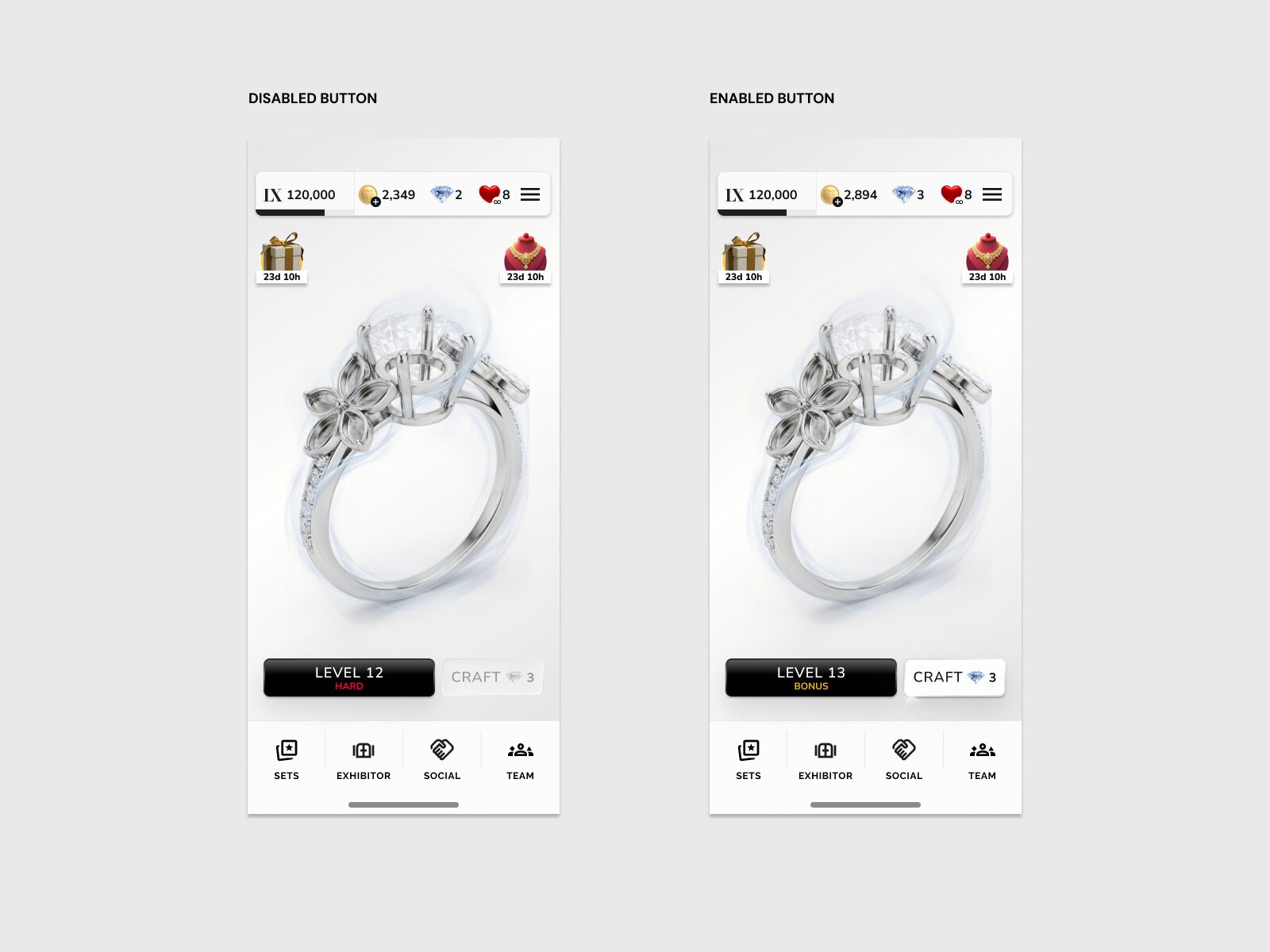
Homepage Craft Button States
The crafting screen was prototyped separately, starting with the spatial logic of the part buttons and building up to high-fidelity screens that captured the step-by-step materialisation of the jewel, the LX increment feedback, and the timing and weight of the final colour reveal. Each prototype was scoped around a specific question rather than a complete flow, keeping iteration fast and focused.
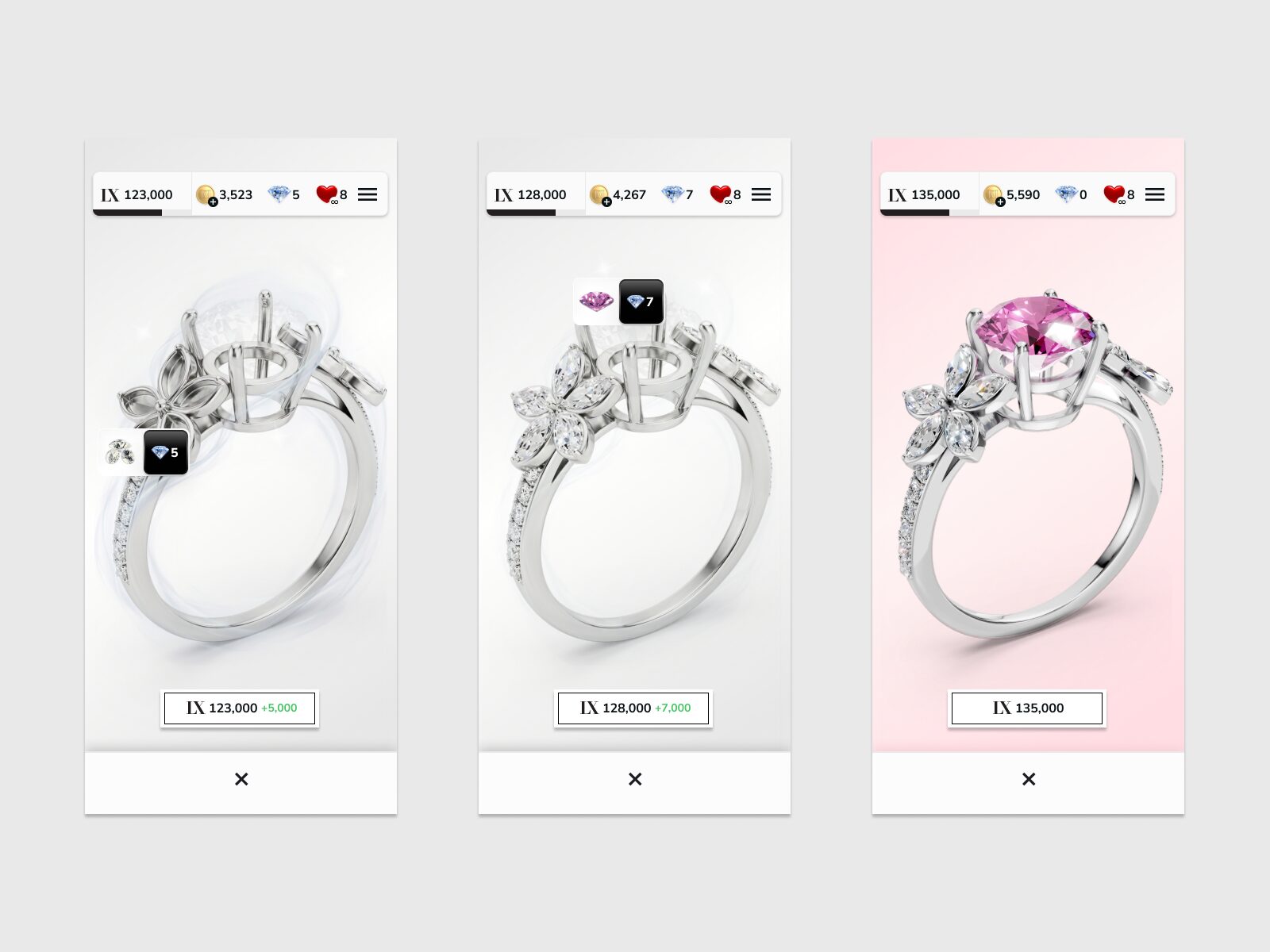
Crafting Process
6. Testing & Validation
Testing focused on two success conditions: did players tap CRAFT from the home screen without prompting, and did they complete at least one full jewel in their first session? The CRAFT button states tested well immediately — players understood that the greyed-out state meant they needed more diamonds, and responded to the active state as a clear call to action. While the spatial UI was intuitive enough for self-guided crafting, we introduced 'Crystal' during the initial onboarding to strategically reinforce the link between diamonds and their utility in the economy. The LX increment indicator gave every step a felt sense of value.
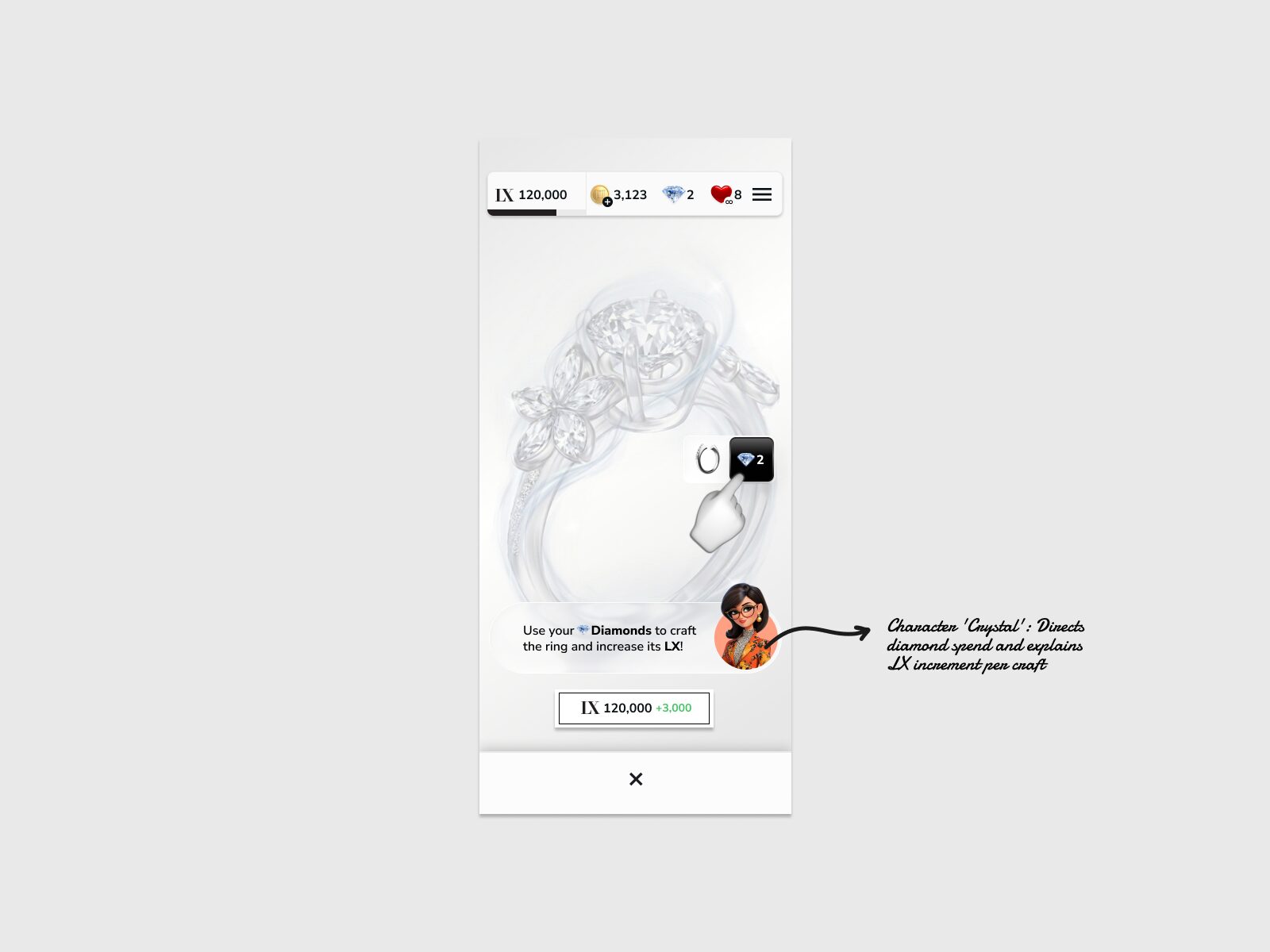
Introducing Crystal for reinforcement
The colour reveal was consistently the strongest emotional moment, with qualitative feedback describing it as the point where the game clicked. Retention data confirmed that players who reached a jewel completion in session one returned at significantly higher rates than those who didn't.
Collection Background Color Reveal
7. Post-Launch & Iteration
Post-launch analysis confirmed the hypothesis. The CRAFT button changes drove a measurable increase in players entering the crafting loop for the first time, and players who completed their first jewel in the opening session returned at significantly higher rates than those who didn't.
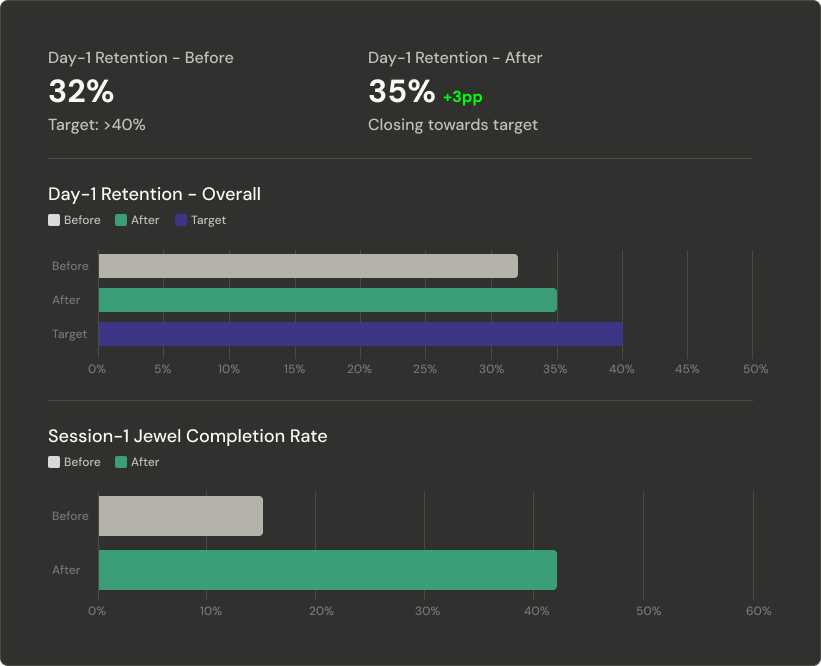
Post Launch Analysis
The colour reveal established itself as the critical emotional hook for day-1 retention — the moment players most often referenced when describing what made the game feel different. The LX system showed early signs of driving longer-term investment, with players returning to grow their score and expand their collection. These findings shaped the next design cycle, with focus on deepening the outer loop and expanding the collection system to sustain engagement beyond the first jewel completion.
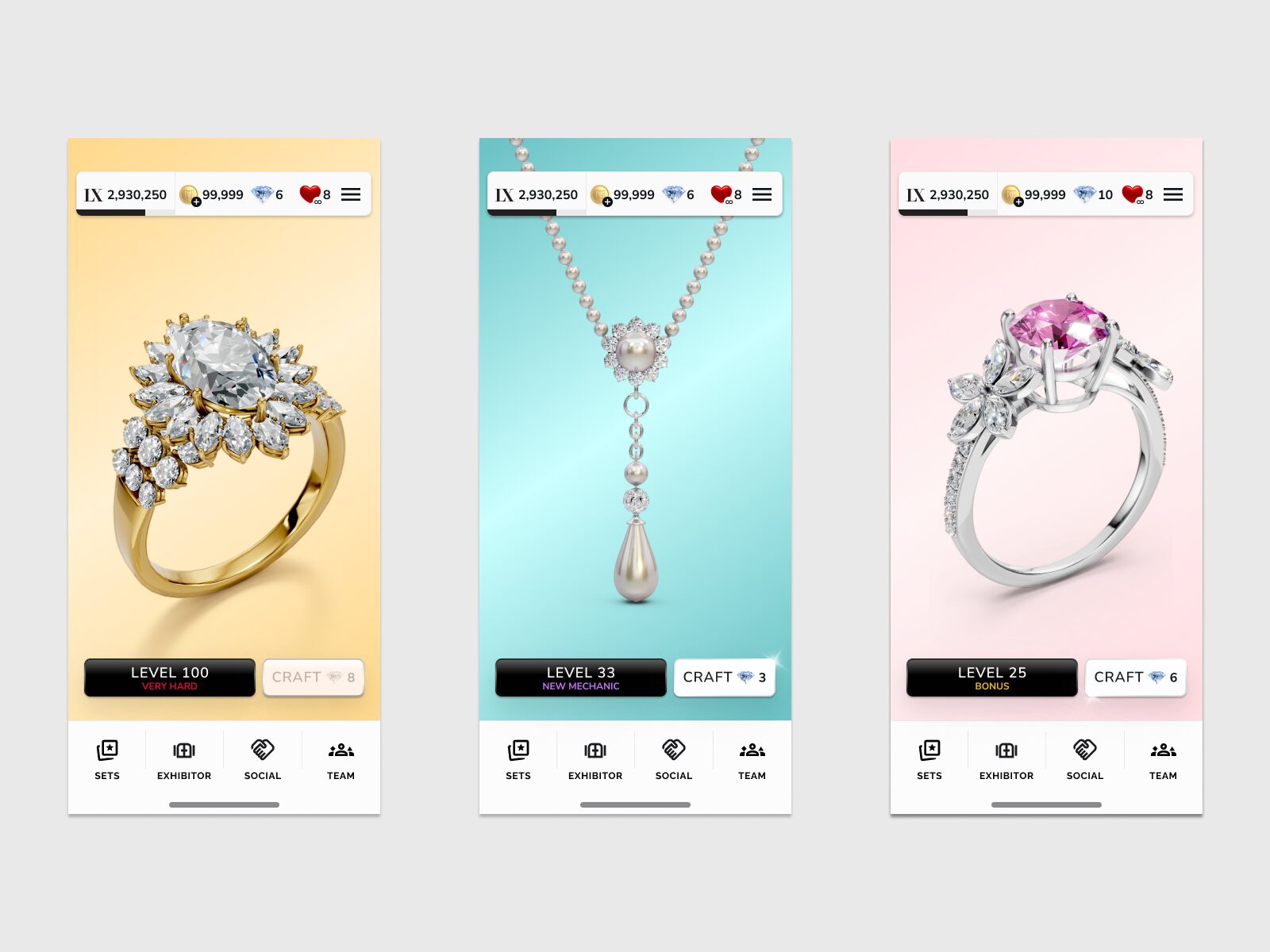
Next Step Expanding Collections

Jordi is an exceptionally talented UX/UI Designer with great attention to detail and the ability to innovate and break pre-established molds.
Manel Sort
Founder & CEO at GFAL
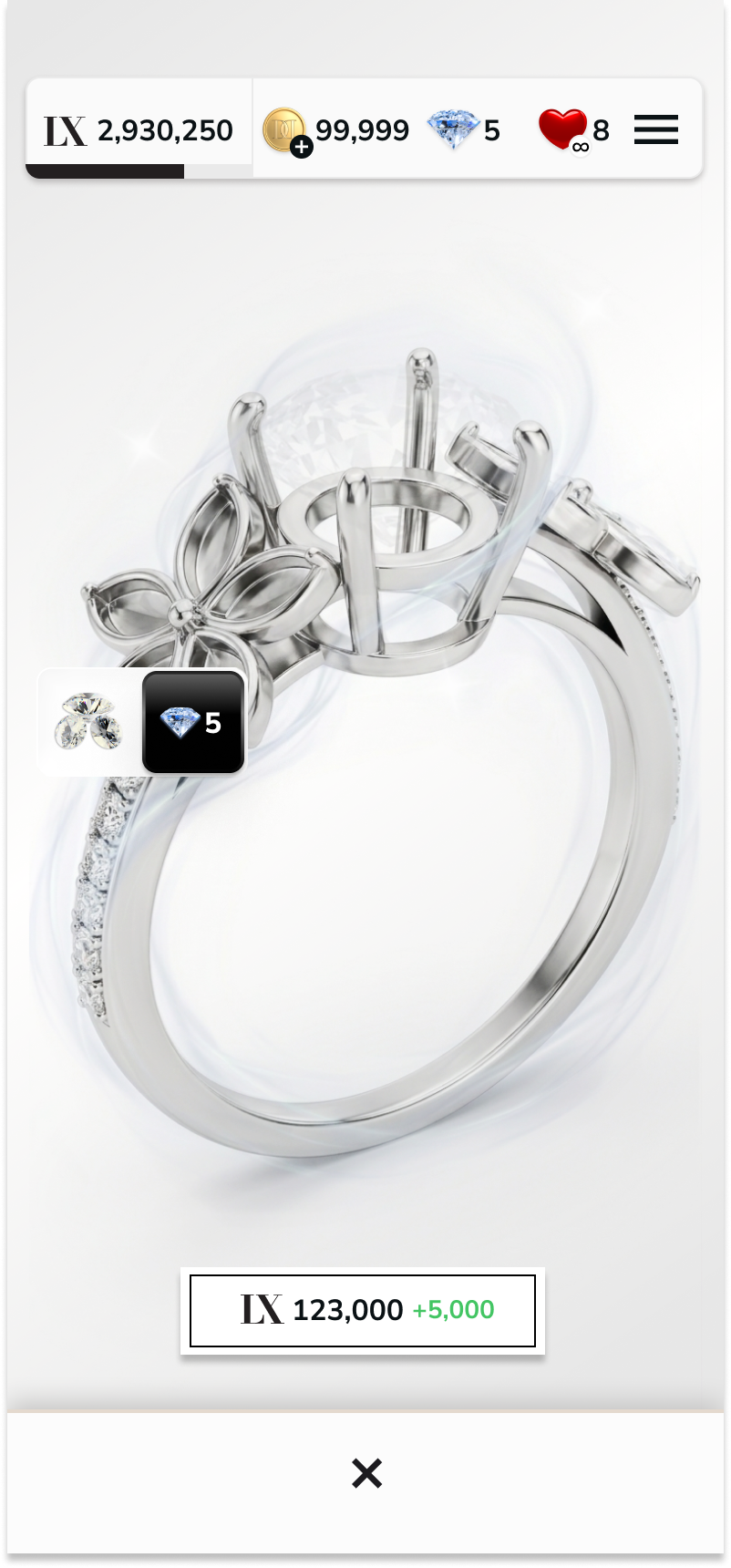
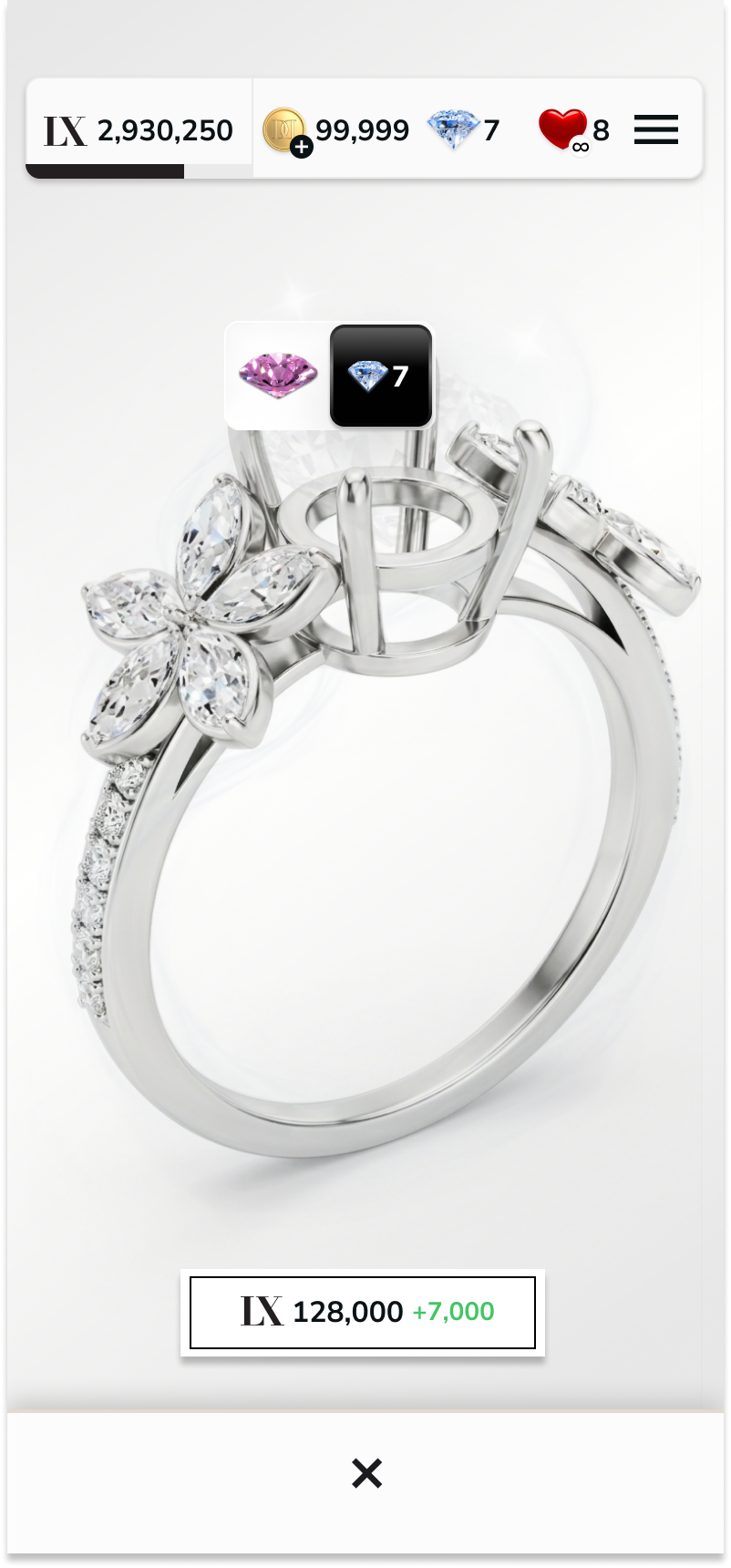
Crafting Loop Improved


Furnishing Details