
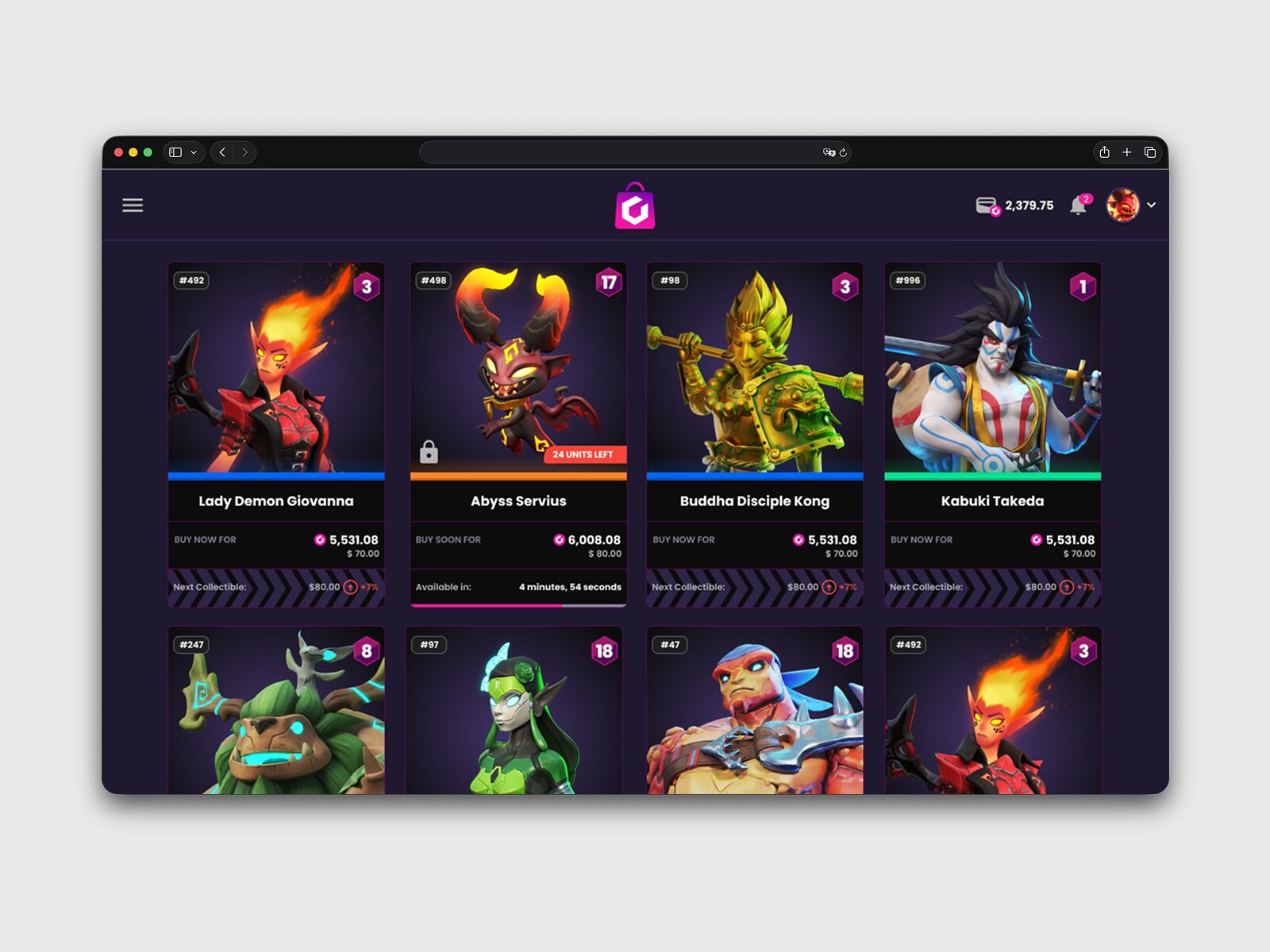
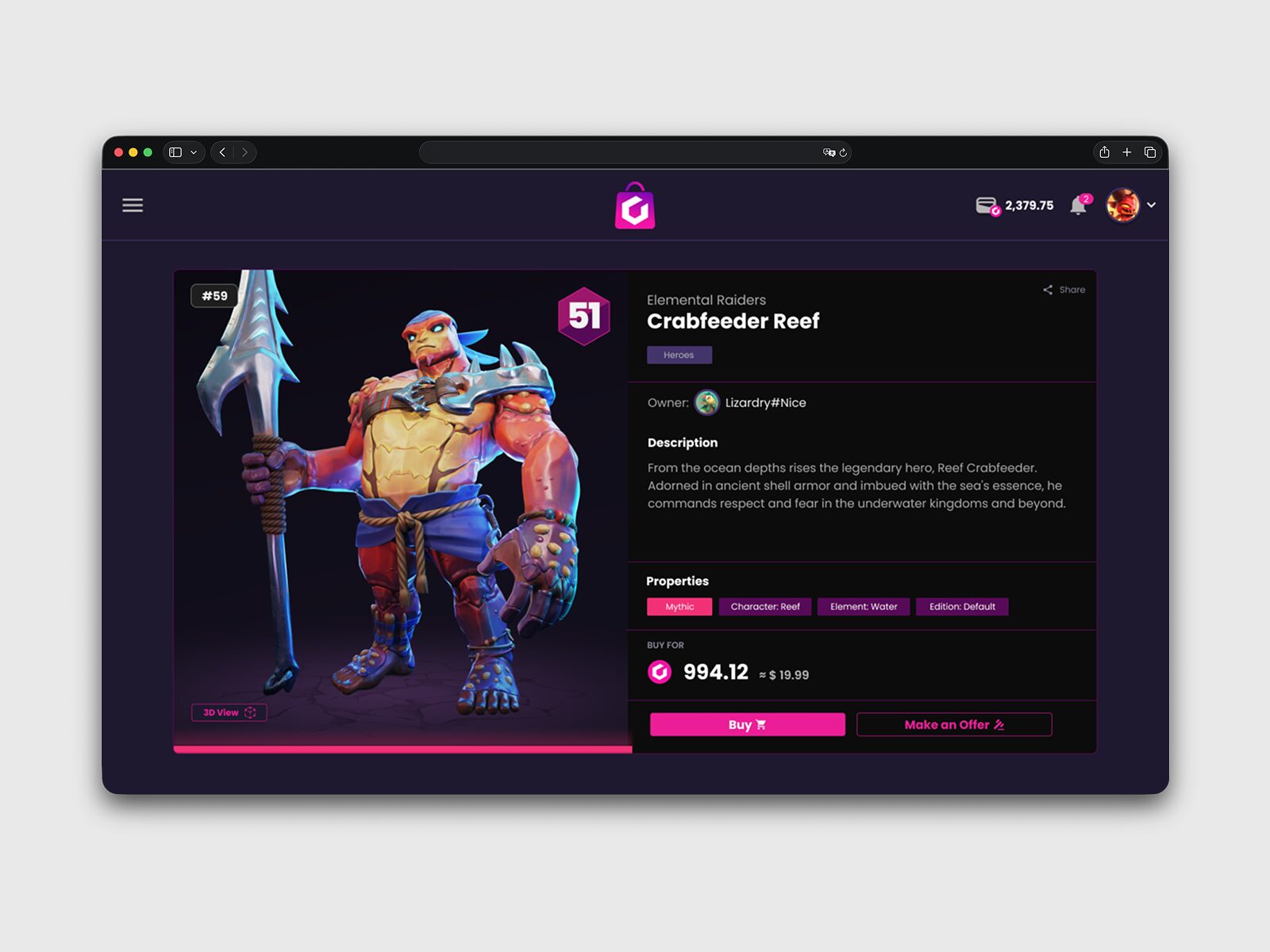
Product Pages
1. Discovery
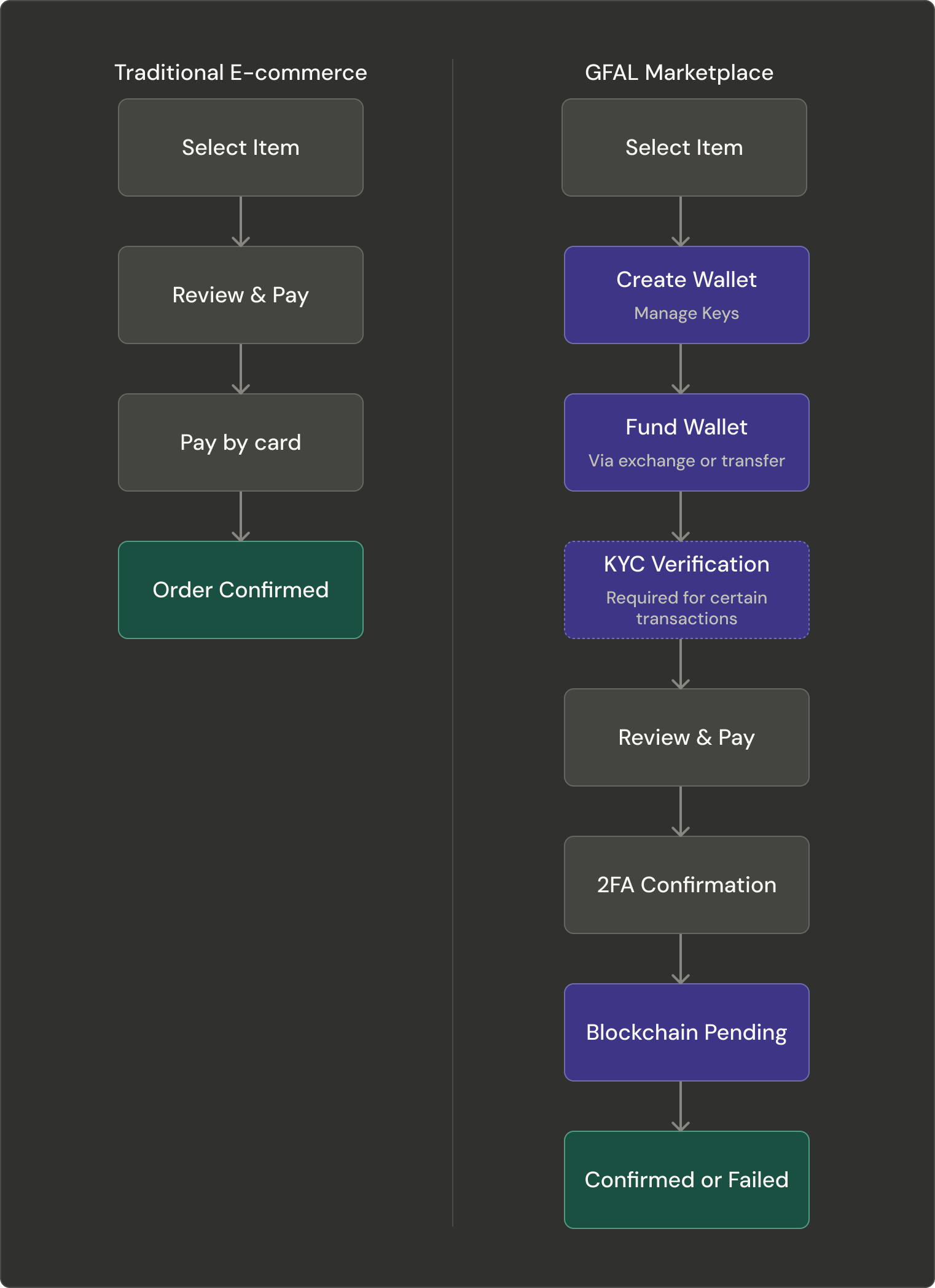
In traditional e-commerce, infrastructure is invisible; in Web3, it is often an exposed complexity that overwhelms the user. We identified that the drop-off wasn't due to a lack of interest in the items, but because the platform demanded a level of crypto-literacy that most players didn't possess.
We called this the Web3 Tax; the invisible cost in time, confusion, and effort that blockchain infrastructure imposes on users before they can complete a single purchase.
The Wallet Wall
Players had to create a crypto wallet and manage public and private keys before they could even consider a purchase.
The Liquidity Gap
Buying GFAL token was a multi-step ordeal. Users were forced to external exchanges, breaking the transaction flow.
Transaction Anxiety
Unlike instant card payments, blockchain transactions are irreversible and take some time to confirm.
The Web3 Tax
2. Research
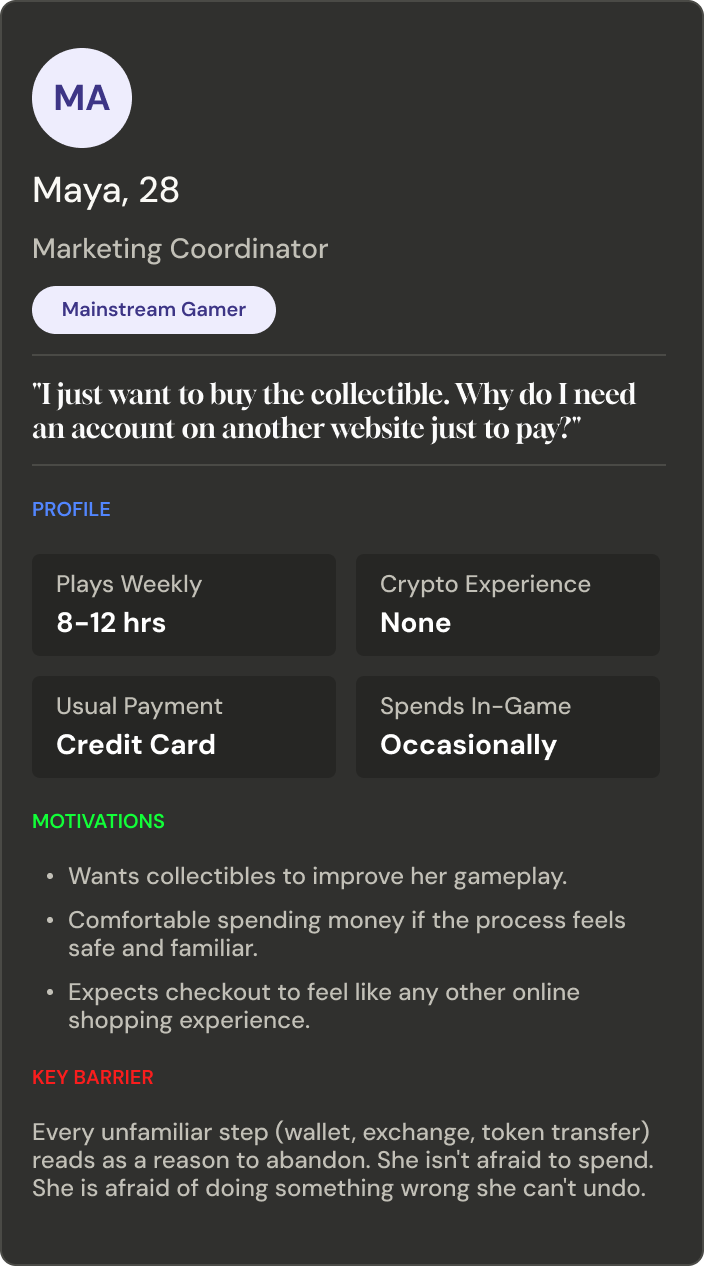
We compared the mental models of "Crypto-Natives" vs. "Mainstream Gamers". While natives tolerate technical friction, mainstream users expect the "Pay -> Confirm -> Done" loop of standard e-commerce. The research proved that the barrier wasn't the cost of the item, but the process of acquiring the currency needed to buy it.
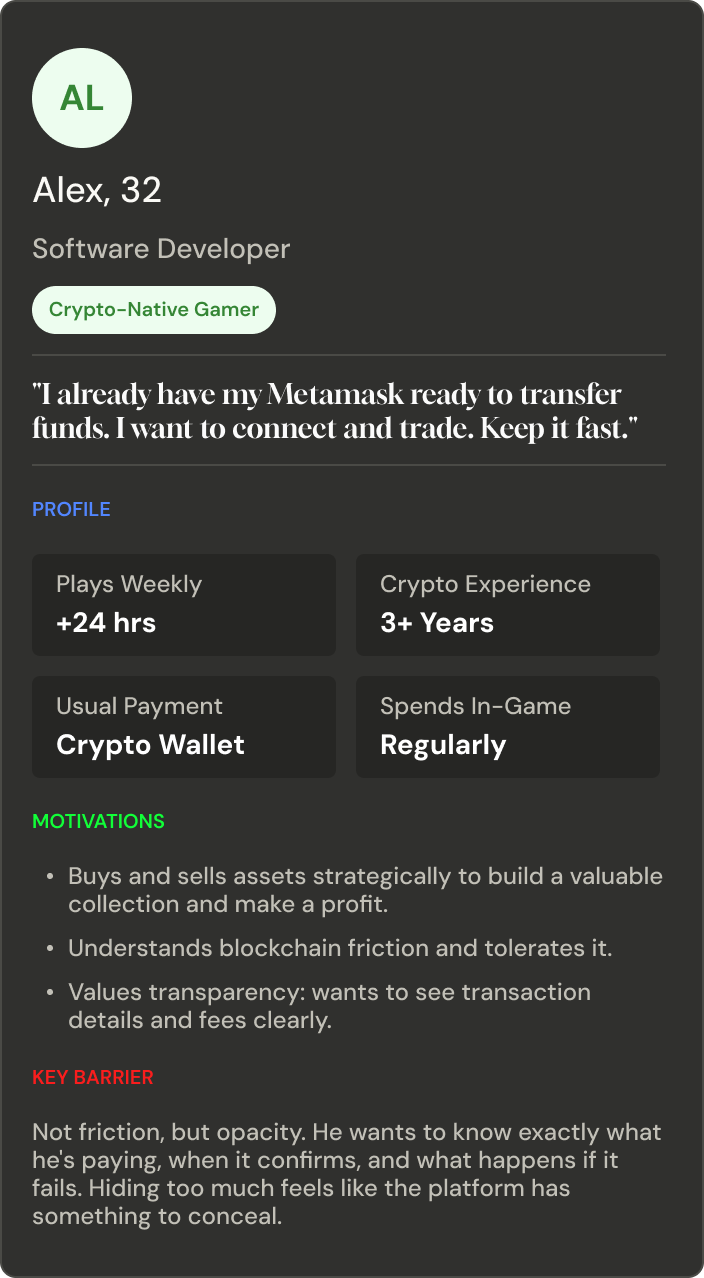
Personas
3. Synthesis & Define
Our focus has shifted to the 'anxiety gap' in the payment flow. We are refining the pre-payment setup (wallet creation, funding, and KYC) to be as frictionless as possible, while ensuring the post-payment experience provides the transparency users need to feel secure while their transaction settles.
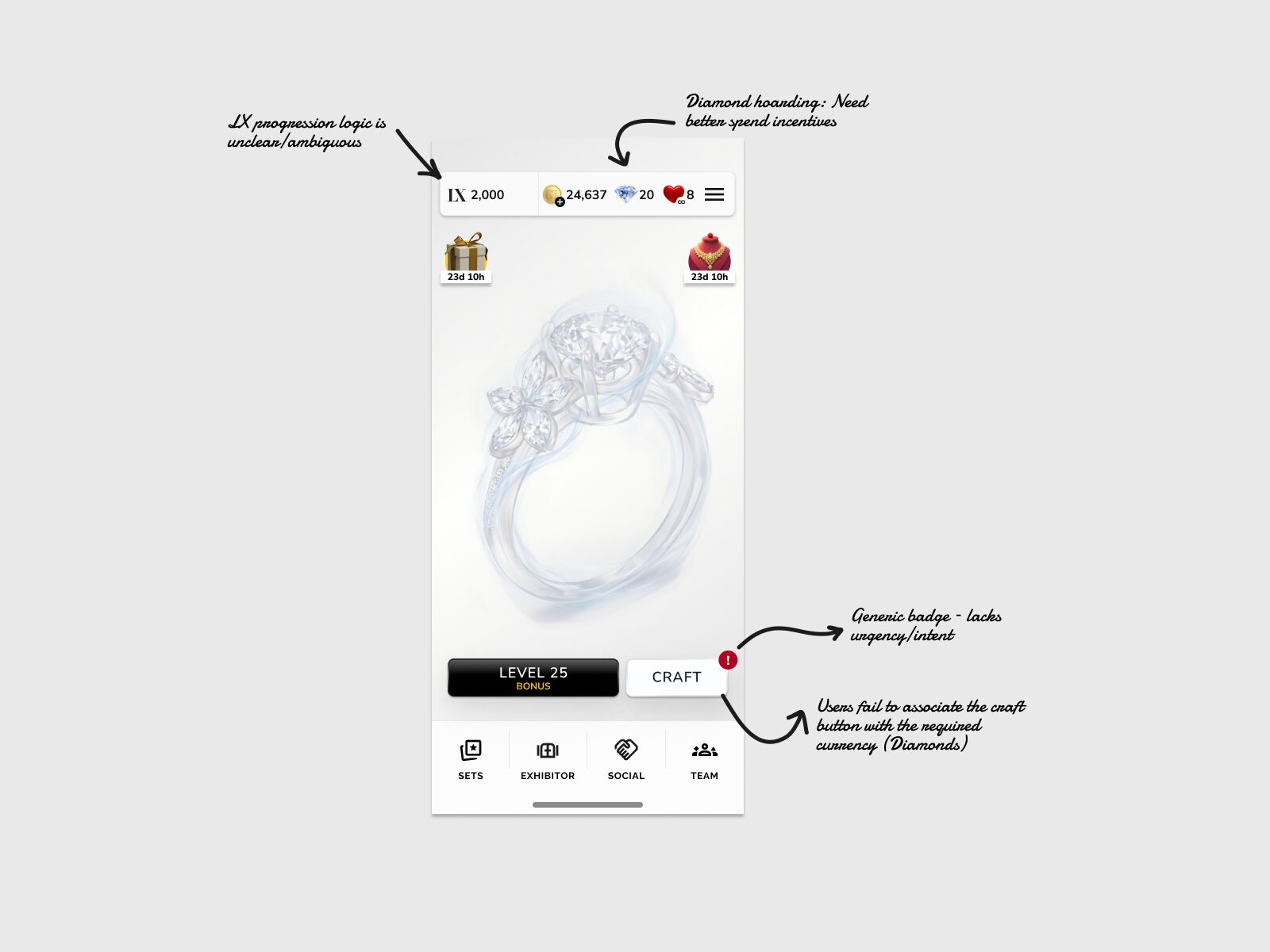
The Homescreen
4. Ideation
We implemented a strategy of Progressive Unblocking, reframing every blockchain barrier as a solvable, guided step.
One-Tap Wallet Creation
For first-time users, the wallet setup is surfaced at the natural moment they first try to engage with the marketplace. A single click generates a wallet. The user gets a wallet address with no technical overhead. For advanced users who want control, private key export is available; but never surfaced by default.
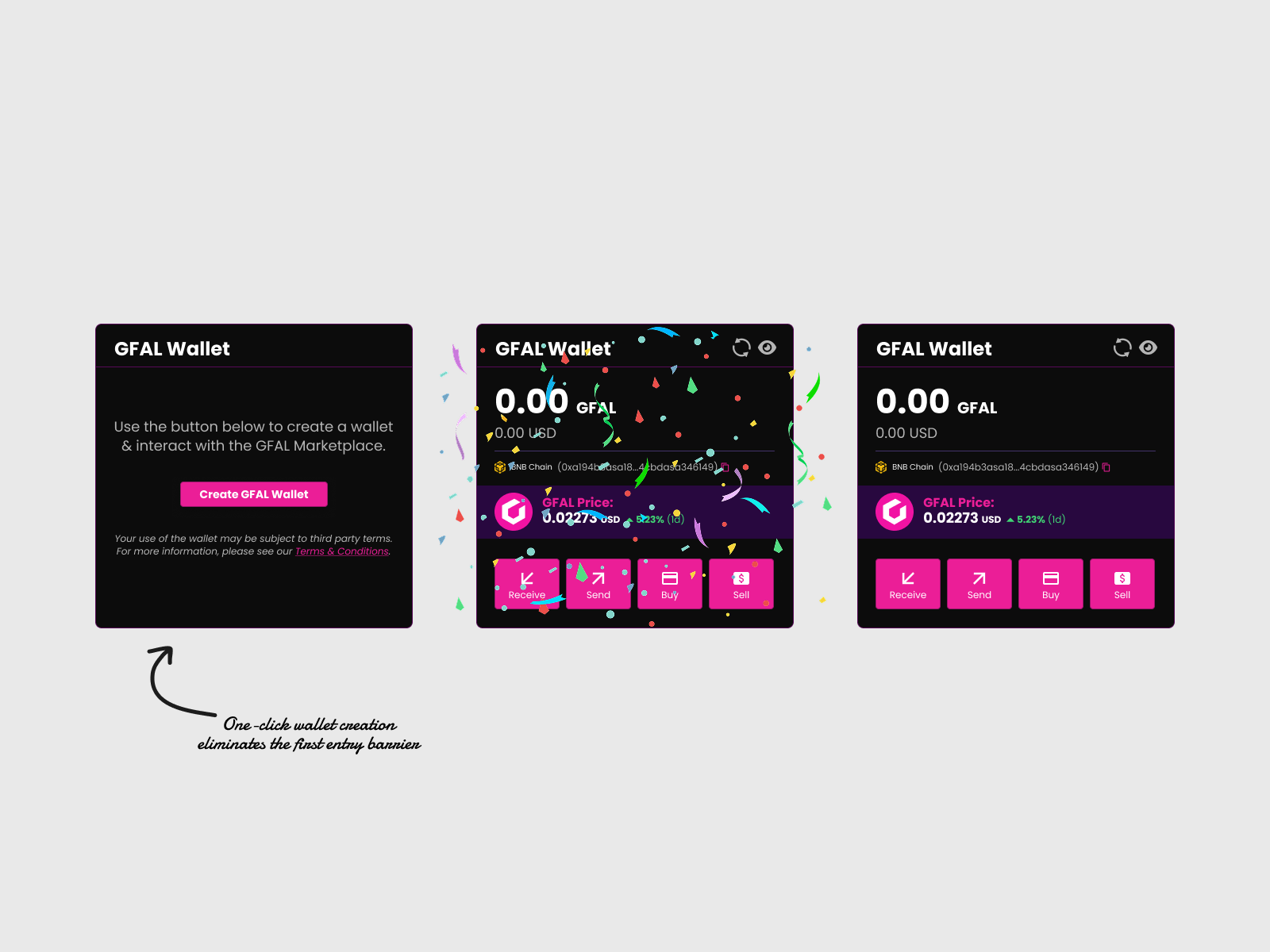
One-Tap Wallet Creation
Integrated Fiat On-Ramp
Rather than sending users to external exchanges to acquire GFAL tokens, we integrated Ramp Network directly into the platform. This allows players to fund their wallet using a credit card, with no crypto knowledge required. For advanced users you have the traditional send and receive functions.
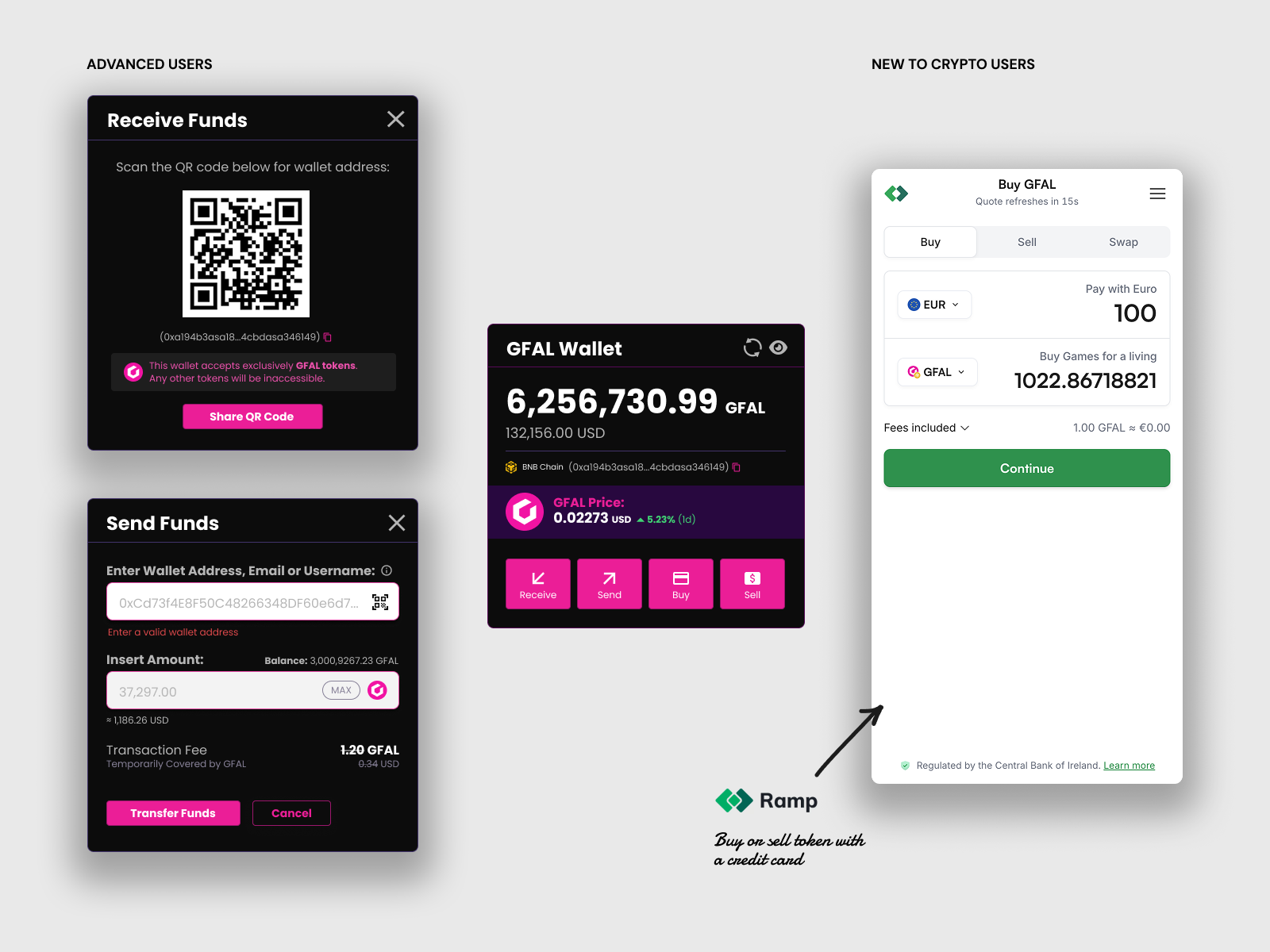
Wallet Functionality
Dynamic KYC
Identity verification is not a wall every user faces. It only triggers at the checkout when the user's total transactions exceed regulatory thresholds; typically starting at $1,000; consistent with how any bank or payment provider handles high-value purchases. When it does appear, it is framed as a standard security step, not as a crypto compliance hurdle.
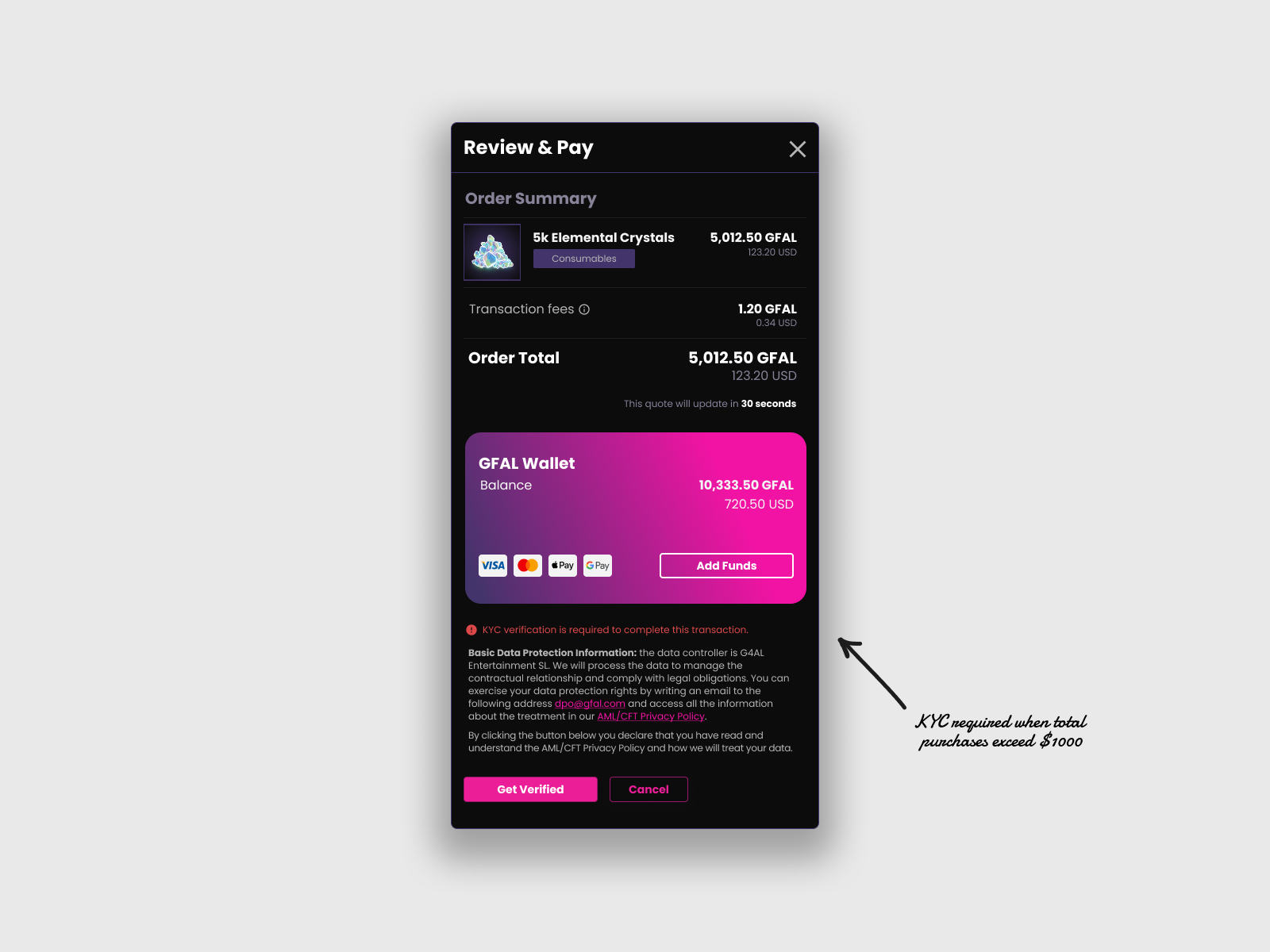
KYC Verification
2FA as a Trust Signal
Because blockchain transfers are irreversible, every transaction requires a confirmation code sent to the user's registered email. Rather than presenting this as an obstacle, we positioned it as proof that the platform takes security seriously, a familiar pattern users already associate with protecting high-value actions. Technical terminology was replaced throughout to ensure clarity; for instance, "gas fees" became "transaction fees".
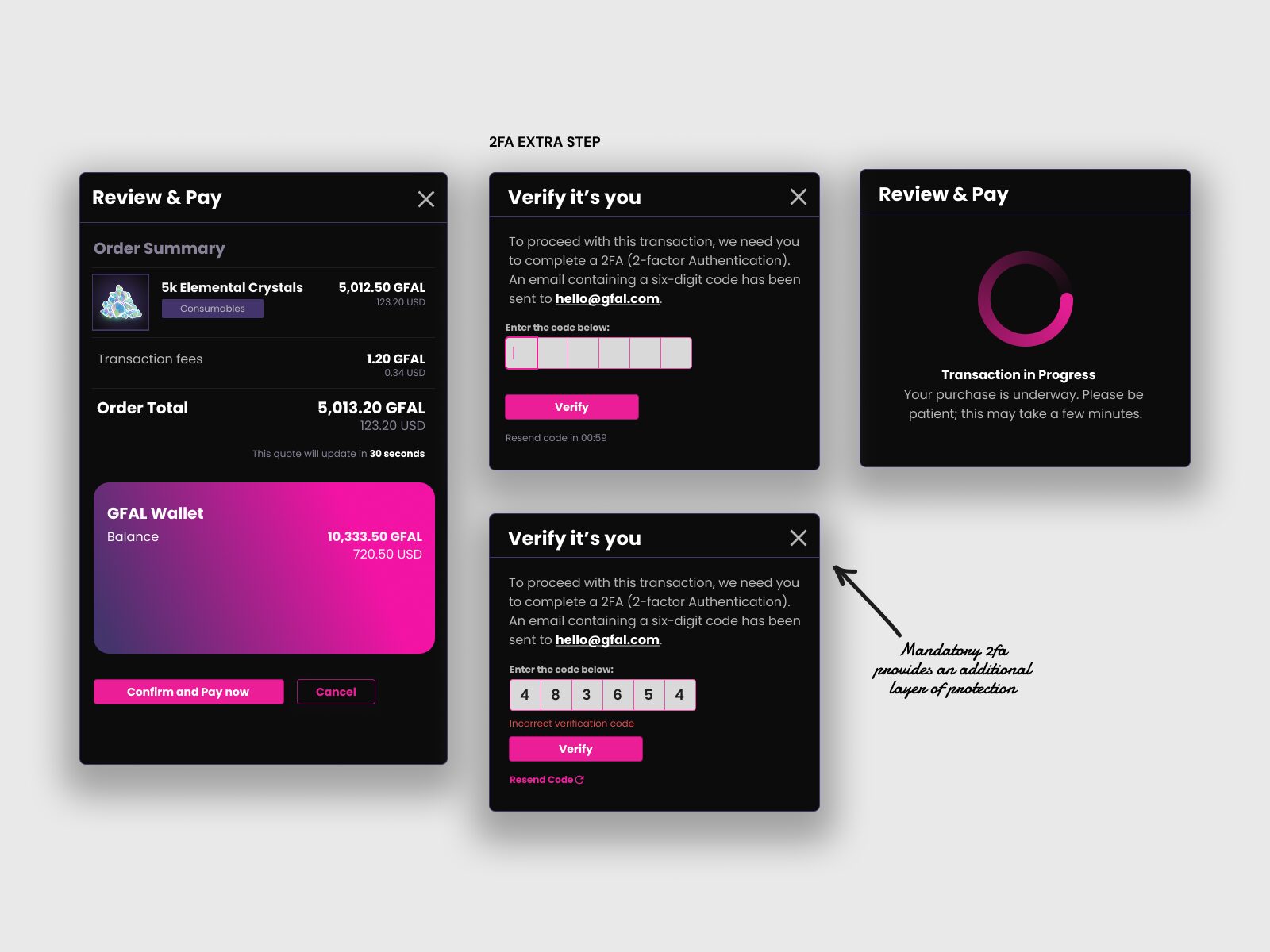
2 Factor Authentication
5. Prototyping
On the prototyping stage, we optimized the checkout flow by streamlining wallet creation and funding, while seamlessly integrating KYC protocols for transactions exceeding specific thresholds.
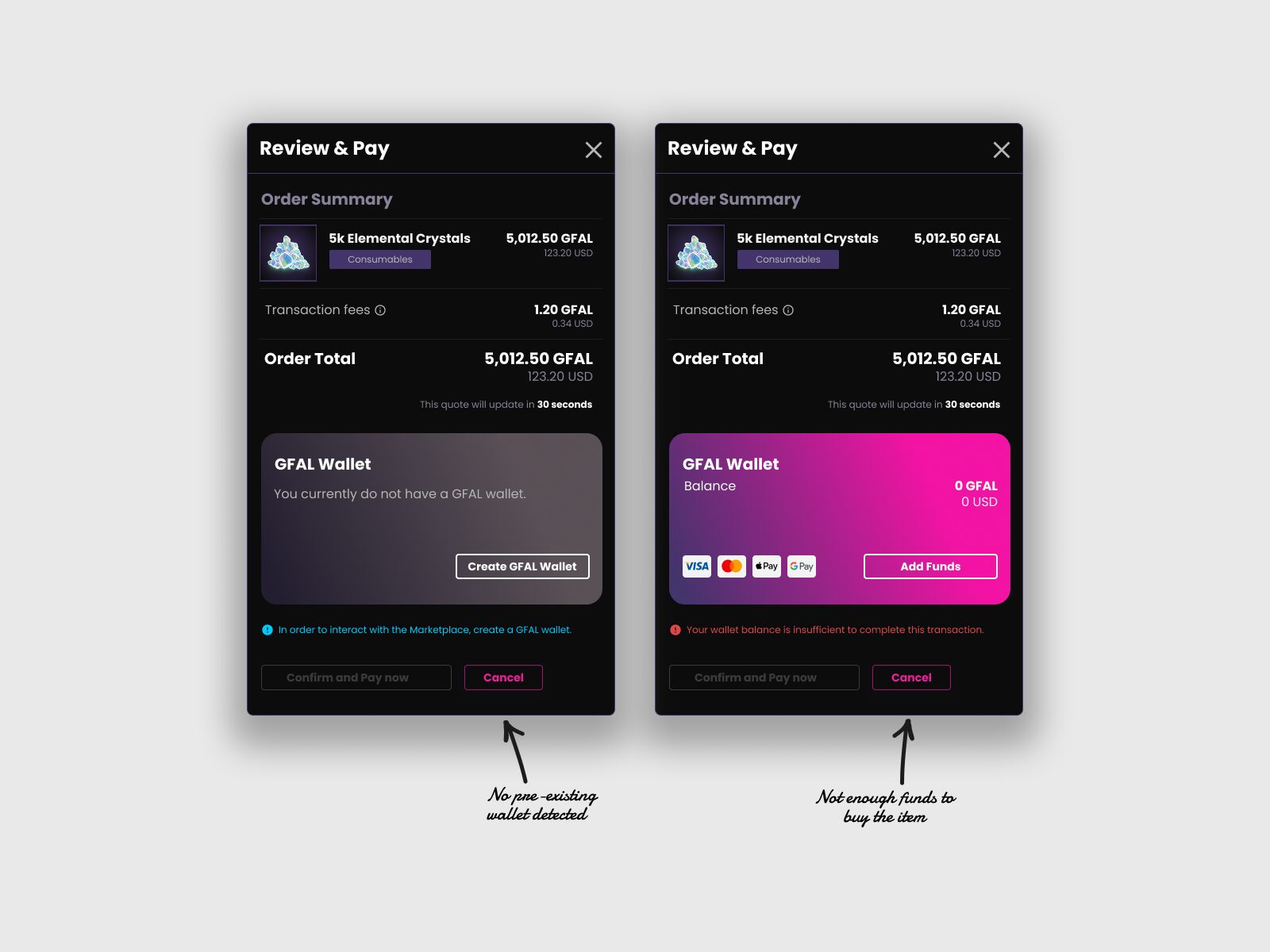
Checkout States
Furthermore, special attention was given to the transaction confirmation state. We A/B tested two confirmation styles: one utilizing persistent item data and another using character-driven emotional cues. This helped us understand if users prefer technical accuracy (seeing their item) or an empathetic response (seeing a reaction) when a transaction concludes.
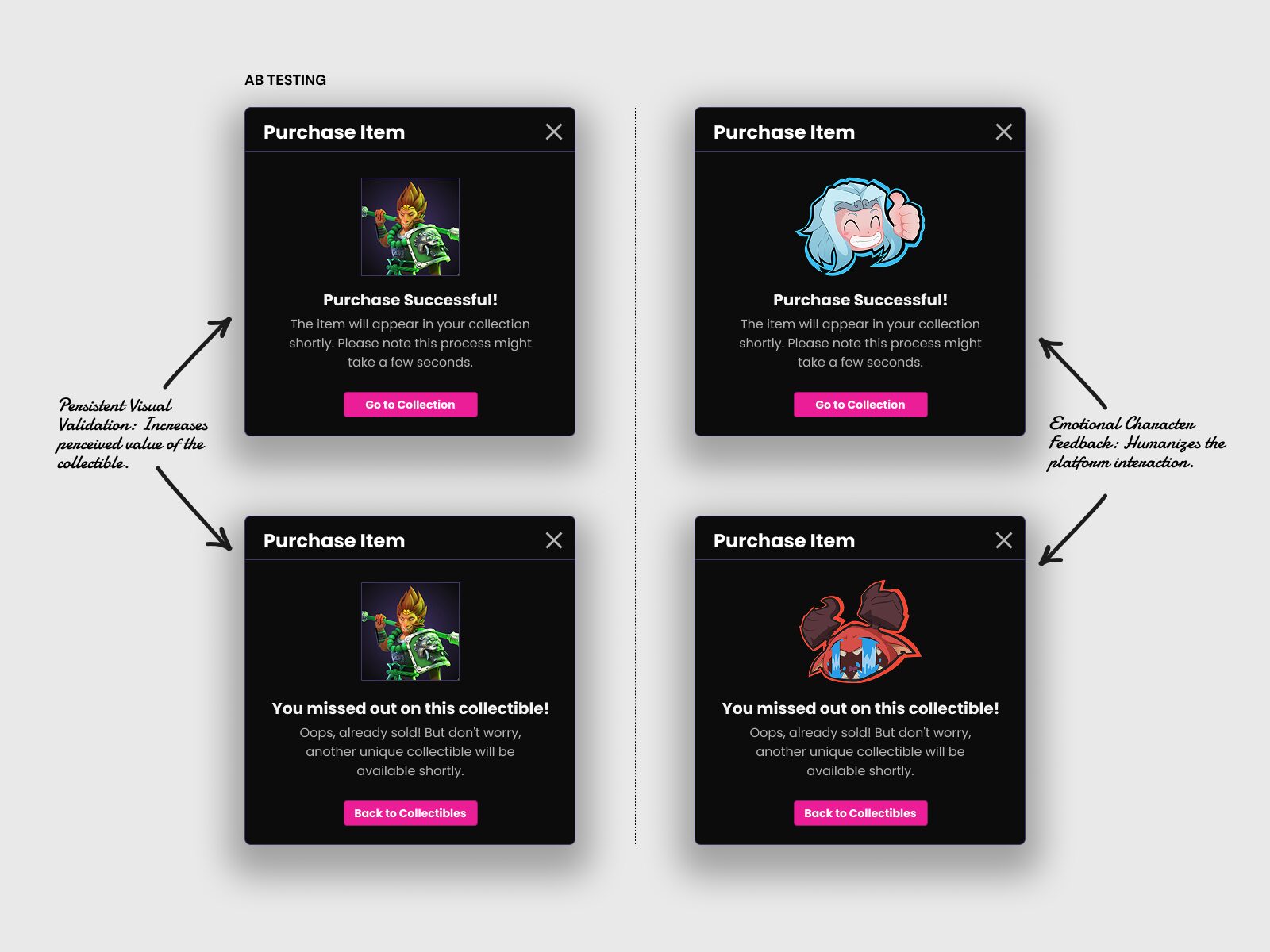
AB Testing
We also tested the sequencing of the full first-time buyer flow: wallet setup → balance check and top-up → KYC (where applicable) → 2FA confirmation. The hypothesis was that users who had set up their wallet and funded it in a prior session would experience the eventual purchase as trivially simple; and that hypothesis proved correct.
6. Testing & Validation
Testing confirmed that users experienced the full onboarding and purchase flow as a single coherent arc, comparable in feel to signing up for any digital platform.
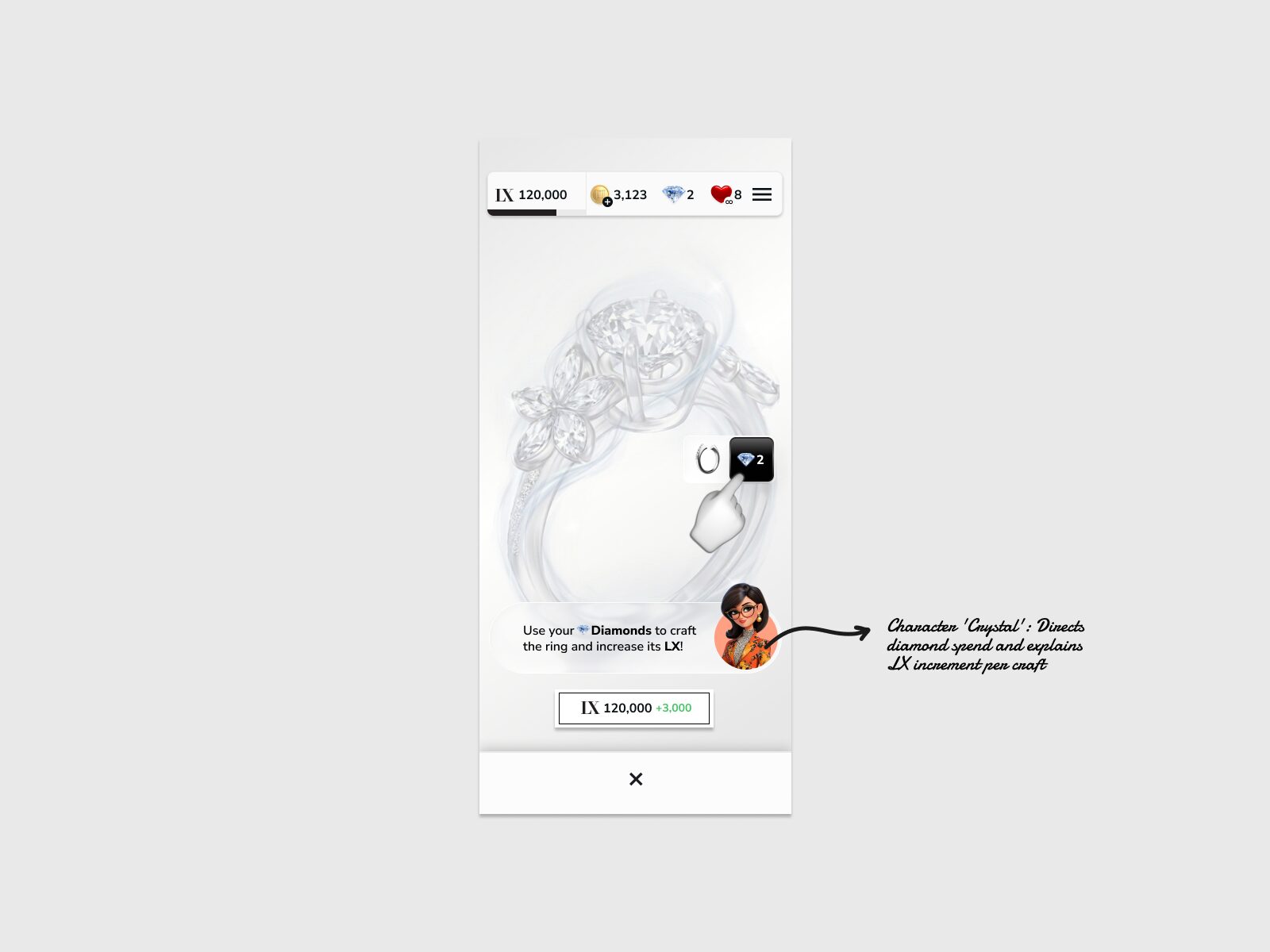
Introducing Crystal for reinforcement
7. Post-Launch & Iteration
The "Web2-First" approach led to a measurable increase in first-time buyer completion
Next steps: We are evolving our "Invisible Web3" strategy by implementing a streamlined onboarding system designed to incentivize wallet creation and funding before users engage with the marketplace. This evolution includes the introduction of a VIP system to reward early adopters.
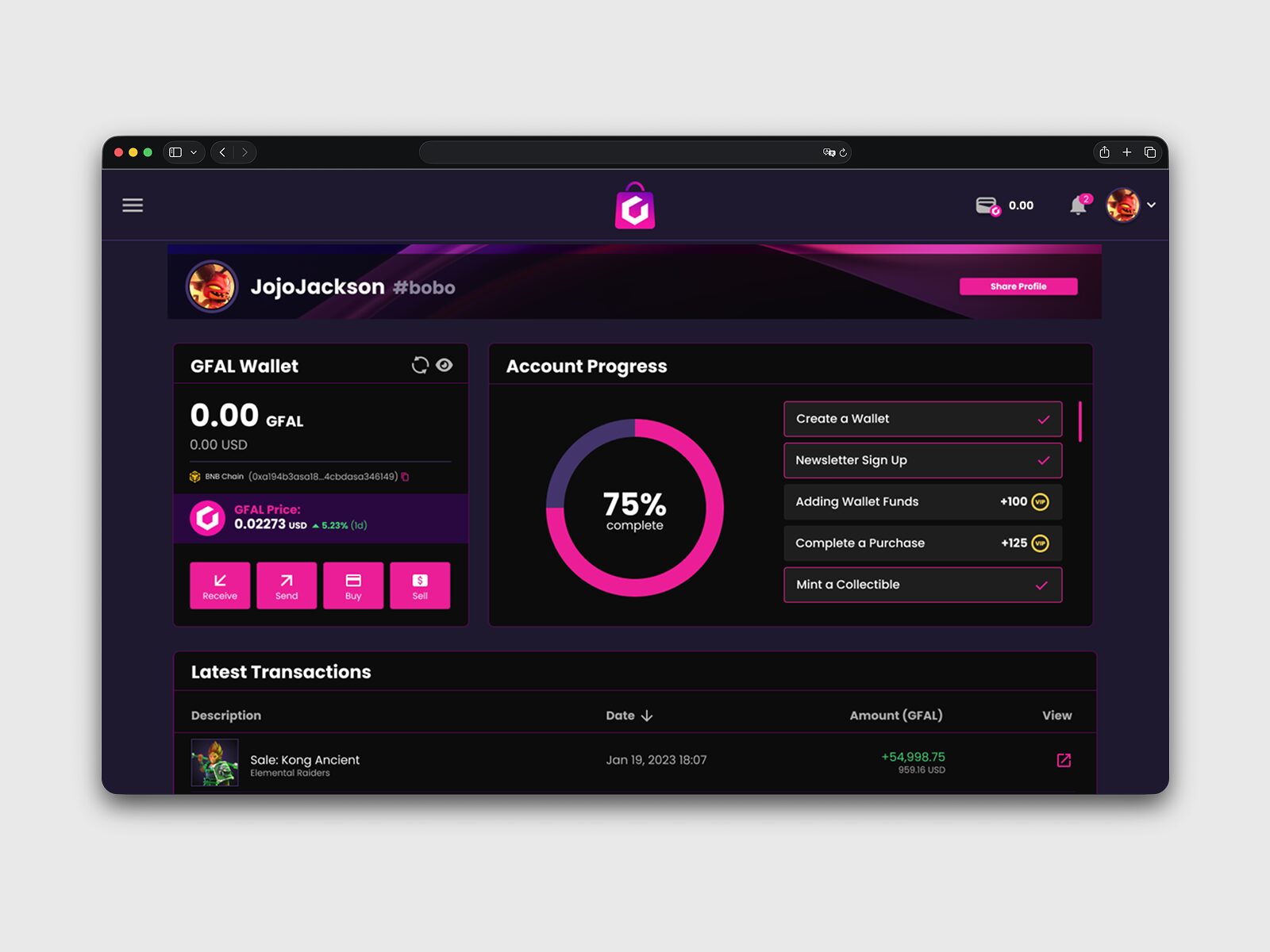
Improving OnBoarding
Jordi's problem-solving skills and proactive mindset made him a key contributor to the team’s success.
Pau Val
Senior Software Engineer at GFAL
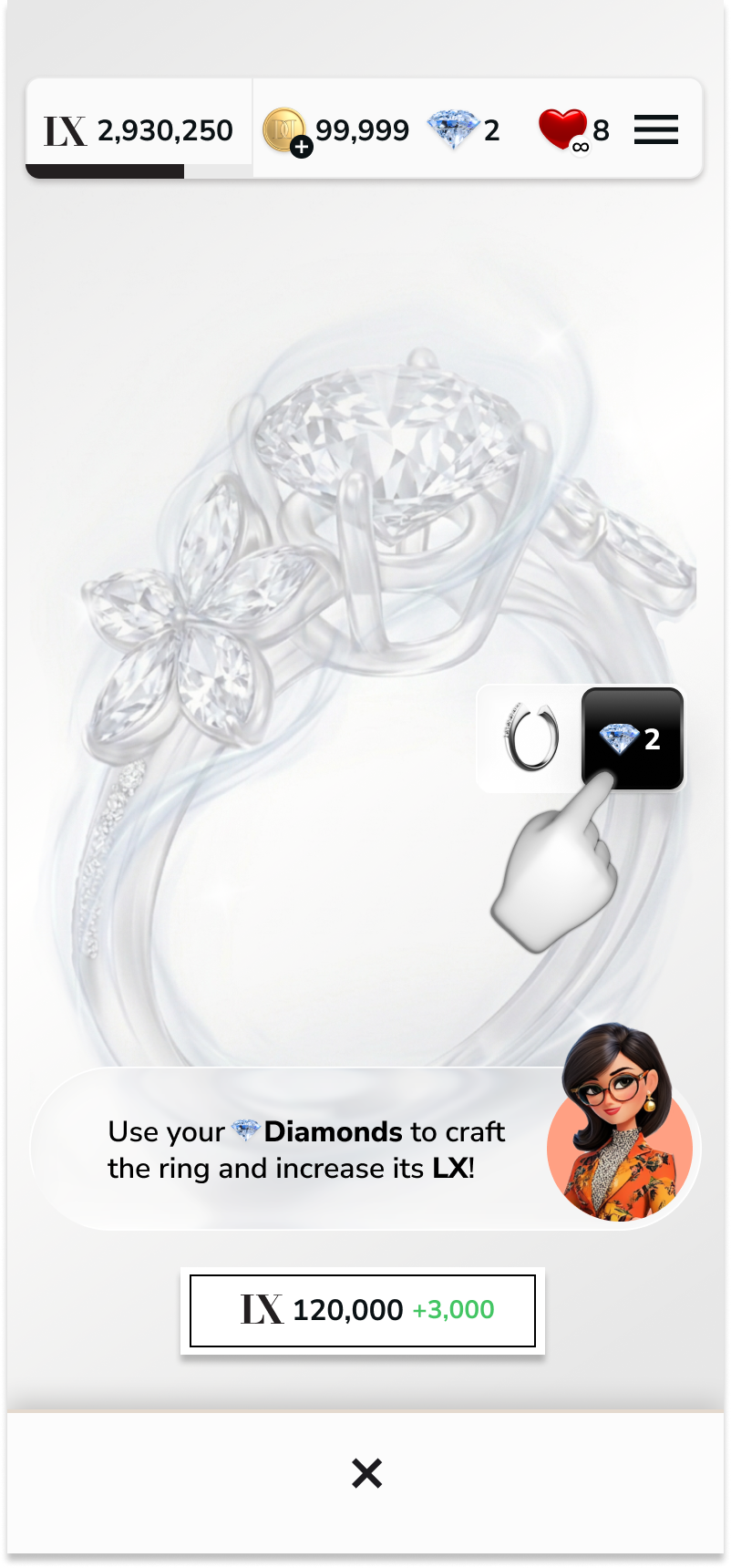



Crafting Loop Improved
Media not available
Media not available
Furnishing Details